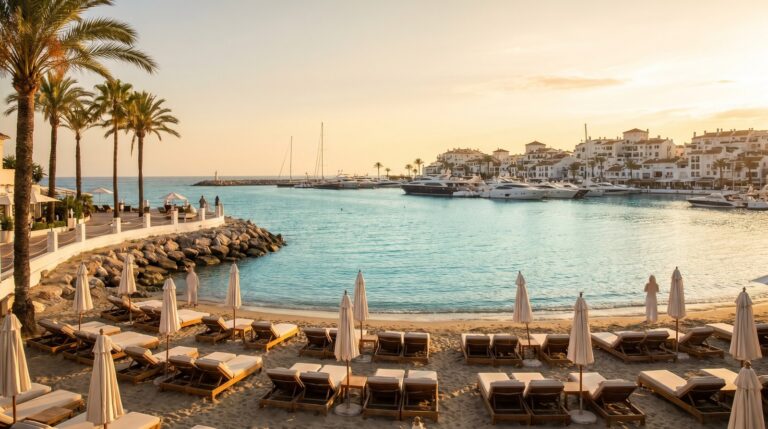

The Costa del Sol is on the cusp of a transportation revolution. After decades of proposals and false starts, the Málaga-Marbella train line has re-emerged as a €2.7 billion infrastructure project that could fundamentally reshape how luxury travellers, residents, and visitors navigate Spain’s most prestigious coastal region. For those who split their time between Málaga’s international airport and Marbella’s Golden Mile, or who charter yachts in Puerto Banús while staying in properties along the coast, this development represents more than convenience—it’s a paradigm shift in regional connectivity.
The €2.7 Billion Proposal: Speed, Scale, and Ambition
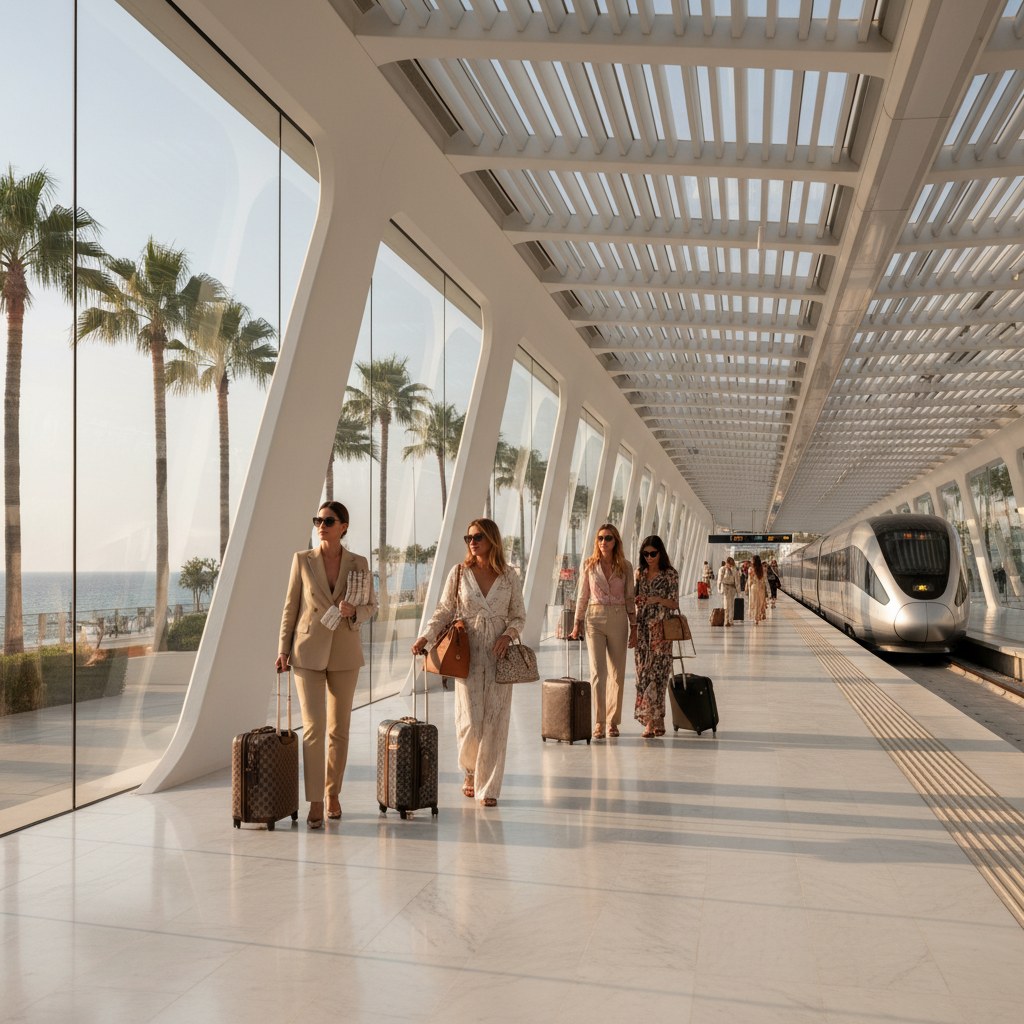
The latest iteration of the Málaga-Marbella train line, developed by consultancy firm ARCS, envisions a 47-kilometre high-performance rail corridor running predominantly parallel to the congested A-7 motorway. Unlike previous proposals that languished in bureaucratic limbo, this plan arrives with concrete engineering studies, environmental assessments, and a detailed financial roadmap.
The technical specifications are impressive. Trains would operate at speeds up to 160 km/h, completing the non-stop journey in just 22 minutes—a stark contrast to the current 45- to 90-minute drive, depending on traffic. With intermediate stops at key municipalities including Torremolinos, Fuengirola, Mijas Costa, and Estepona, the total journey time would extend to approximately 55 minutes, still significantly faster and more predictable than road travel during peak summer months.
Insider perspective: For luxury villa guests arriving at Málaga-Costa del Sol Airport, the current transfer to Marbella properties can stretch beyond 90 minutes during July and August weekends. A reliable 22-minute train connection would fundamentally alter arrival logistics.
The projected €24.5 billion in socioeconomic benefits over three decades reflects more than just saved commute time. This figure accounts for reduced carbon emissions, decreased road maintenance costs, enhanced property values along the corridor, and expanded tourism capacity—all critical factors for a region that welcomed over 13 million visitors to the Costa del Sol in 2023.
Political Momentum and Regional Support
Unlike previous attempts, this proposal has been formally presented to Spain’s Ministry of Transport, Mobility and Urban Agenda, with backing from multiple Costa del Sol municipalities and regional business associations. The political landscape has shifted considerably since earlier discussions in the 2000s and 2010s, when economic constraints and competing infrastructure priorities repeatedly delayed progress.
The current climate is markedly different. Spain’s commitment to EU Green Deal objectives, combined with available Next Generation EU funding mechanisms, has created a more favourable financing environment for sustainable transport infrastructure. Additionally, the post-pandemic surge in remote work has accelerated population growth along the Costa del Sol, intensifying pressure on existing road networks.
For those managing luxury properties in Marbella, the implications extend beyond guest transfers. Improved connectivity could influence seasonal rental patterns, expand the catchment area for short-term visitors, and enhance the appeal of Costa del Sol real estate to international buyers seeking seamless access to Málaga’s cultural offerings and international flight connections.
Historical Context: Decades of Proposals and Delays
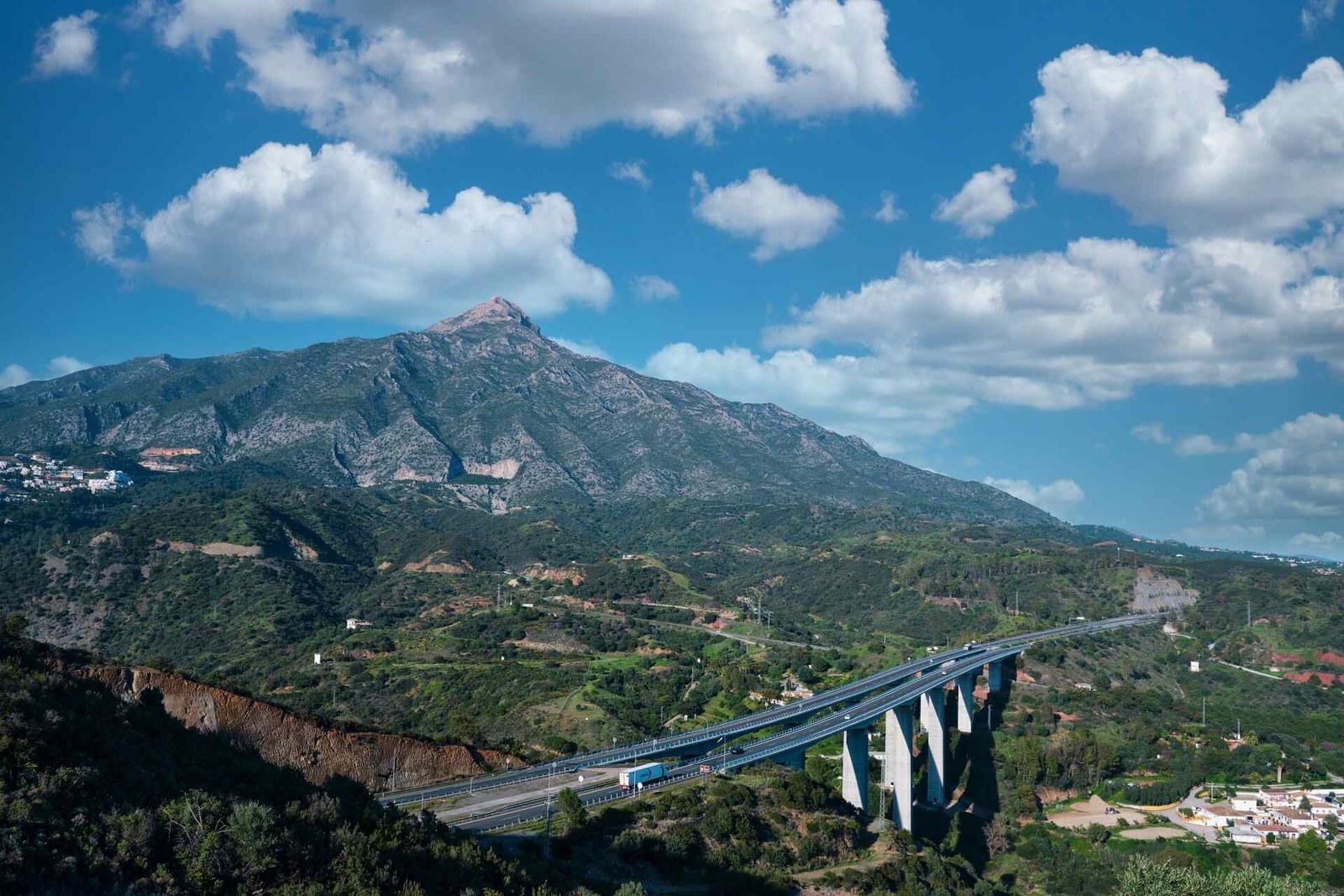

The idea of connecting Málaga and Marbella by rail is hardly new. Proposals date back to the 1980s, when the region first began experiencing significant tourism-driven growth. However, successive plans faltered due to a combination of insufficient funding, political disagreements over route alignment, and competing infrastructure priorities such as the AVE high-speed rail expansion to northern Spain.
In the early 2000s, discussions centred on extending the existing Cercanías commuter line from Málaga to Fuengirola further west toward Marbella. This approach was eventually deemed impractical due to land availability constraints and the technical challenges of threading rail infrastructure through densely developed coastal areas. A subsequent proposal for a metropolitan light rail system gained traction around 2010 but was ultimately shelved following Spain’s economic crisis.
What distinguishes the current proposal is its comprehensive approach. Rather than incremental extensions or compromise solutions, the ARCS plan envisions a purpose-built corridor designed for both current demand and projected growth through 2050. The route alignment alongside the A-7 minimizes land acquisition challenges while maximizing accessibility to existing population centres.
Impact on Luxury Travel and Hospitality
For the luxury travel sector, the Málaga-Marbella train line represents a significant operational enhancement. Consider the typical journey of a high-net-worth visitor: arrival at Málaga Airport on a private or first-class commercial flight, followed by a chauffeur transfer to a Golden Mile villa or a yacht awaiting in Puerto Banús. While this experience remains premium, it’s constrained by the A-7’s notorious congestion, particularly during the June-through-September high season.
A reliable rail connection would introduce new possibilities:
- Seamless airport transfers: Direct rail service from Málaga Airport to central Marbella in under 30 minutes, with dedicated first-class carriages for premium travellers
- Day-trip flexibility: Guests staying in Marbella could easily access Málaga’s Picasso Museum, historic Alcazaba fortress, and Michelin-starred restaurants without committing to a full-day excursion
- Multi-destination itineraries: Luxury concierge services could craft experiences combining Marbella beach clubs with Málaga cultural attractions within a single day
- Reduced transfer costs: While premium chauffeur services will always have their place, rail connectivity offers an elegant alternative for certain journeys
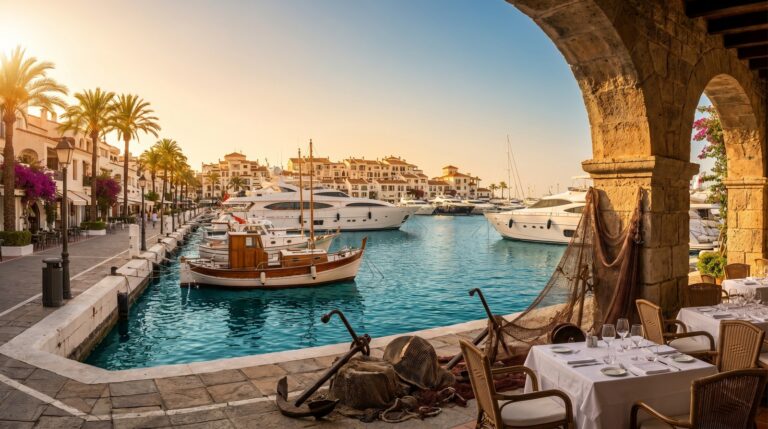
For those utilizing full concierge services, the train line would expand the scope of what’s feasible within a luxury itinerary. A morning yacht charter from Puerto Banús, an afternoon exploring Málaga’s contemporary art scene, and an evening return to a Nueva Andalucía villa becomes logistically straightforward rather than an exercise in complex timing and traffic management.
Environmental and Sustainability Considerations
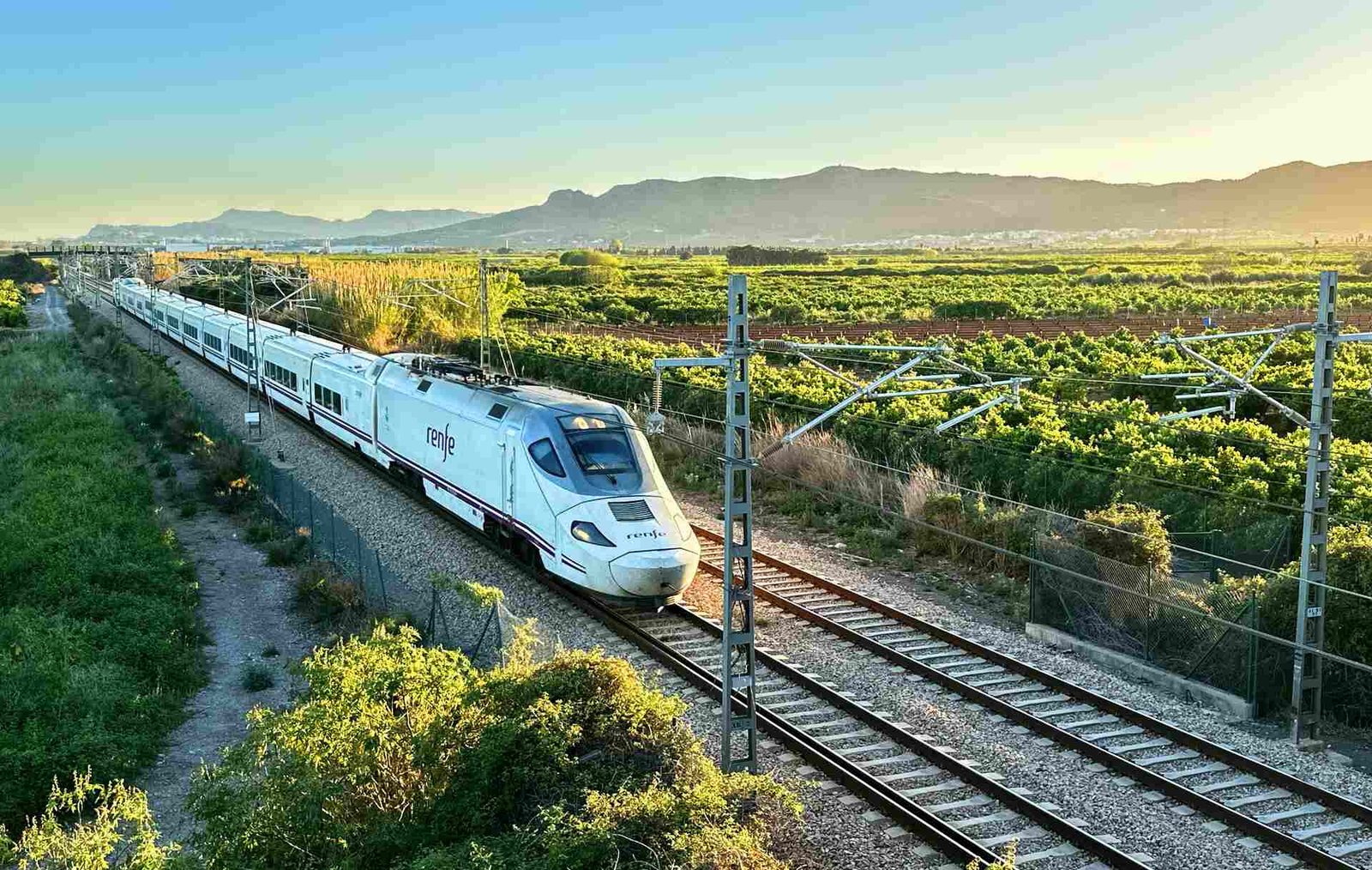
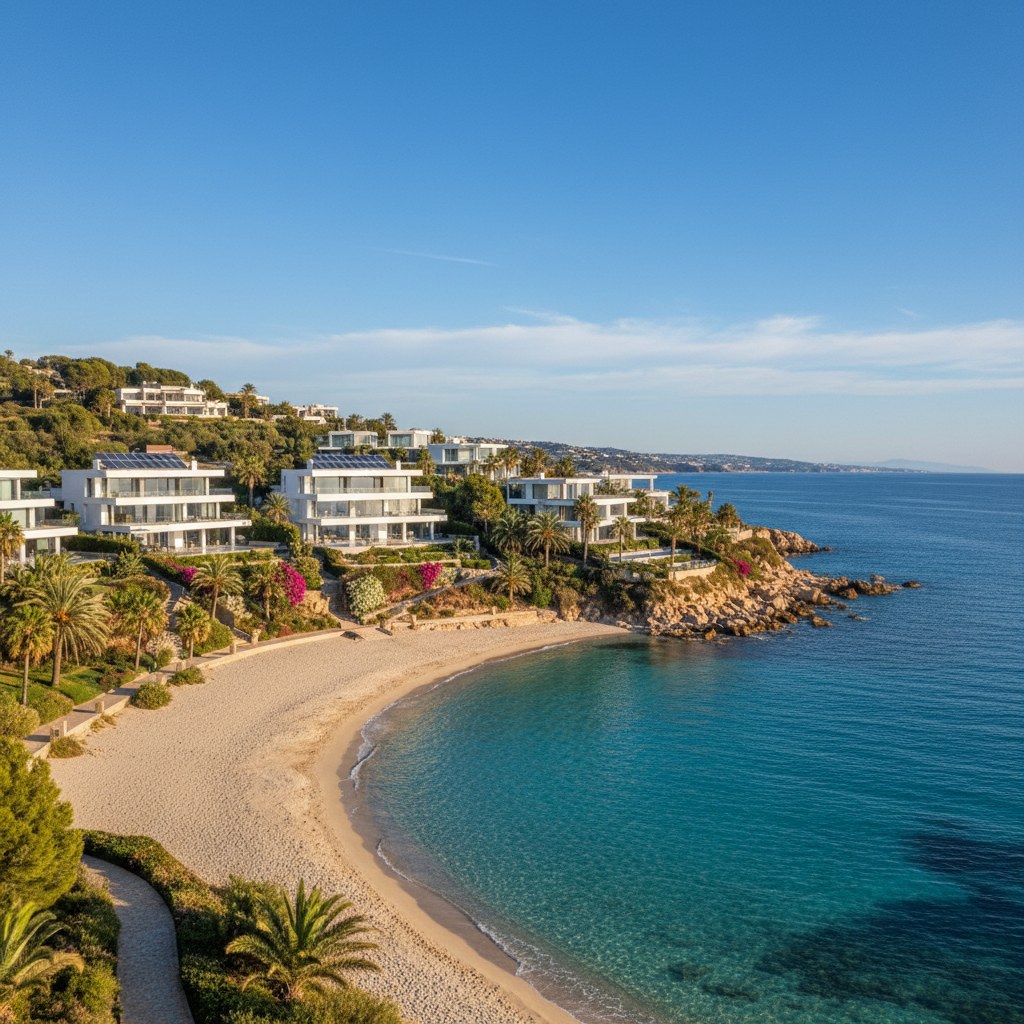
The Costa del Sol’s popularity has created environmental pressures that are increasingly difficult to ignore. The A-7 motorway, which carries over 100,000 vehicles daily during peak season, generates significant carbon emissions and contributes to air quality challenges in coastal municipalities. Traffic congestion also impacts the region’s appeal to environmentally conscious luxury travellers who increasingly prioritize sustainable destinations.
The proposed train line addresses these concerns directly. Projected ridership estimates suggest the system could remove 15,000 to 20,000 daily car journeys from coastal roads once fully operational. Operating on electric traction, the trains would produce zero direct emissions, contributing to Spain’s commitment to achieve climate neutrality by 2050.
Local insight: Marbella’s luxury hospitality sector has increasingly embraced sustainability initiatives, from solar-powered villas to eco-conscious yacht charters. Improved public transport infrastructure aligns with this broader shift toward responsible luxury tourism.
For property owners and villa managers, enhanced rail connectivity could become a marketable amenity. The ability to promote properties as accessible via sustainable transport, without sacrificing convenience or luxury, appeals to a growing segment of discerning travellers who evaluate destinations based on environmental credentials alongside traditional luxury metrics.
Timeline and Realistic Expectations
Despite the momentum behind the current proposal, realistic expectations are essential. Major infrastructure projects in Spain typically face a 7- to 12-year timeline from initial approval to operational service, accounting for detailed engineering, environmental permitting, land acquisition, construction, and systems testing.
The immediate priority is securing commitment from Spain’s central government, which would need to allocate funding and designate the project as a national infrastructure priority. This process alone could extend through 2025 or 2026. Assuming favourable decisions, preliminary engineering and environmental studies would occupy 2026-2028, with construction potentially commencing around 2028-2029.
Under an optimistic scenario, the Málaga-Marbella train line could enter service in the early 2030s. More conservative projections extend this to the mid-2030s, accounting for potential delays, funding adjustments, or design modifications based on environmental assessments.
For those planning long-term investments in Costa del Sol real estate or hospitality ventures, these timelines are relevant. Properties located near proposed station sites—particularly in San Pedro de Alcántara, central Marbella, and Estepona—may see enhanced value appreciation as the project advances through approval stages, even before construction begins.
What This Means for Marbella’s Luxury Sector
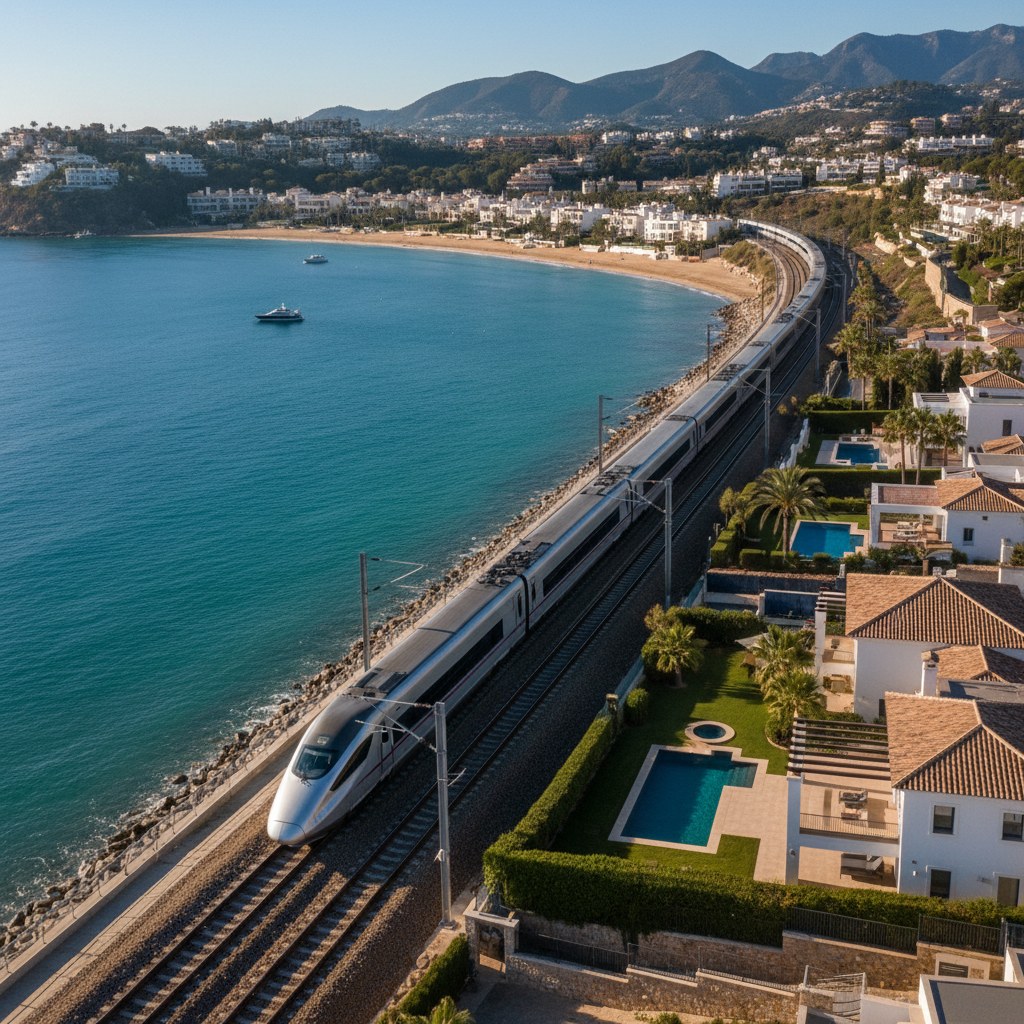
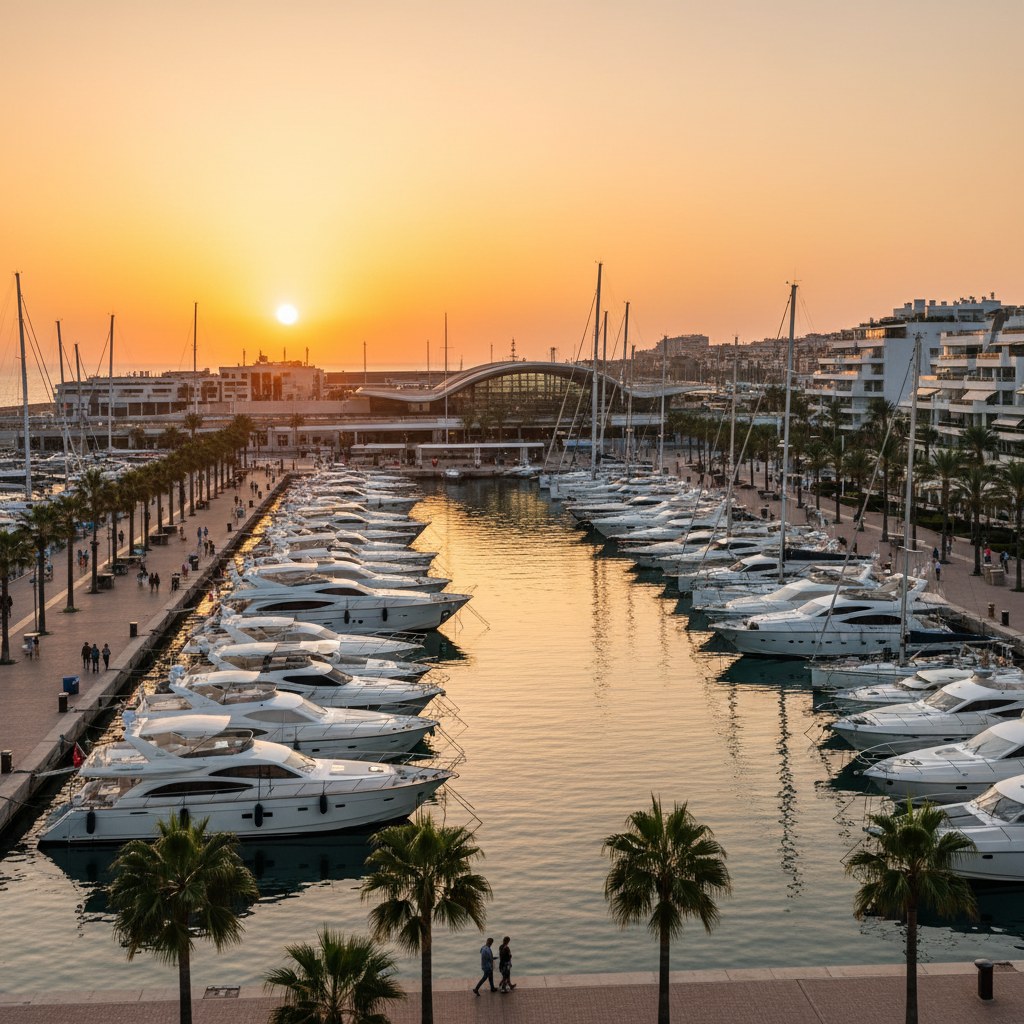
The Málaga-Marbella train line won’t replace the appeal of chauffeur-driven luxury vehicles or the exclusivity of private transfers. However, it will fundamentally alter the accessibility equation for the Costa del Sol’s most prestigious destinations.
Consider the implications for different luxury travel segments:
- Villa rentals: Properties within walking distance or short taxi ride of train stations gain a significant convenience advantage, particularly for guests who prefer not to rent cars
- Yacht charters: Improved connectivity between Málaga and Puerto Banús could facilitate multi-day itineraries that combine land-based and maritime experiences
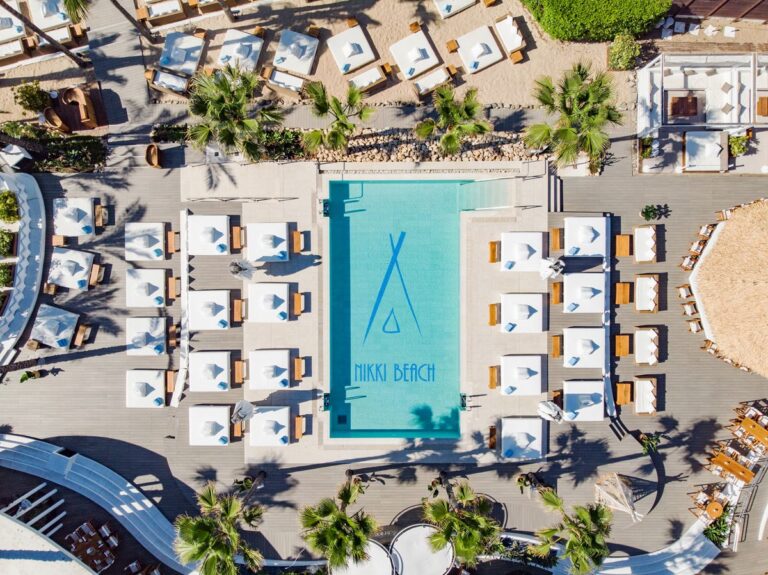
- Beach clubs and nightlife: Visitors staying in Málaga hotels could easily access Marbella’s legendary beach clubs and return the same evening
- Event planning: Corporate groups and luxury events could draw attendees from a wider geographic catchment area
For the team at Marbella Hospitality, enhanced rail connectivity represents an opportunity to craft more diverse, sophisticated itineraries that leverage the entire Costa del Sol rather than treating Marbella as an isolated destination. The ability to seamlessly integrate Málaga’s cultural assets, Marbella’s beach and nightlife scene, and Estepona’s emerging gastronomy into cohesive luxury experiences will distinguish forward-thinking concierge services.
Why Choose Marbella Hospitality for Costa del Sol Experiences
Whether the Málaga-Marbella train line arrives in five years or fifteen, navigating the Costa del Sol’s luxury landscape requires local expertise, established relationships, and meticulous attention to detail. Marbella Hospitality specializes in creating seamless, elevated experiences across the entire region:
- Dedicated concierge support: Our local team manages every detail, from airport transfers to last-minute restaurant reservations
- Exclusive access: Long-standing relationships with premier venues ensure VIP tables, priority yacht bookings, and access to sold-out events
- Comprehensive services: From luxury villa rentals to yacht charters, we curate complete Costa del Sol experiences tailored to your preferences
- Real-time insights: Our team stays current on regional developments, ensuring your itinerary leverages the latest openings, events, and opportunities
Planning Your Costa del Sol Experience
While infrastructure developments unfold over years, the Costa del Sol’s appeal remains immediate and compelling. Whether you’re considering a summer villa rental, planning a yacht charter for the season, or exploring long-term property investment, the region offers unparalleled luxury lifestyle opportunities today.
The proposed Málaga-Marbella train line adds another dimension to the Costa del Sol’s evolution from seasonal resort destination to year-round luxury hub. As connectivity improves and sustainable infrastructure expands, the region’s position as Europe’s premier Mediterranean destination only strengthens.
For personalized guidance on luxury accommodations, exclusive experiences, and comprehensive concierge services throughout the Costa del Sol, contact the Marbella Hospitality team. We’ll ensure your Costa del Sol experience exceeds expectations, whether you arrive by train, private transfer, or yacht.