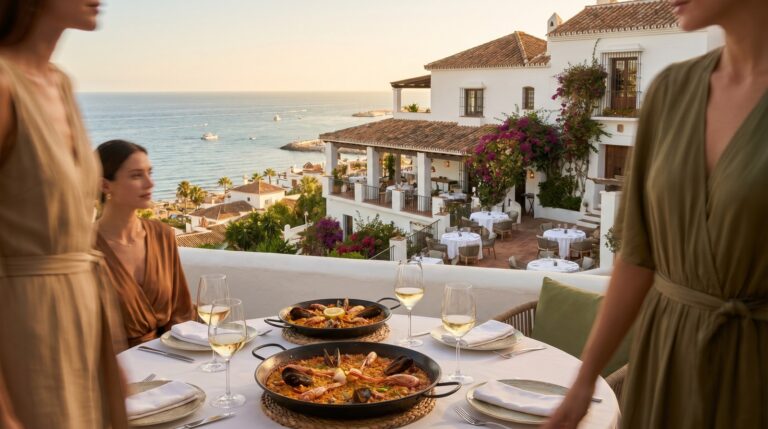
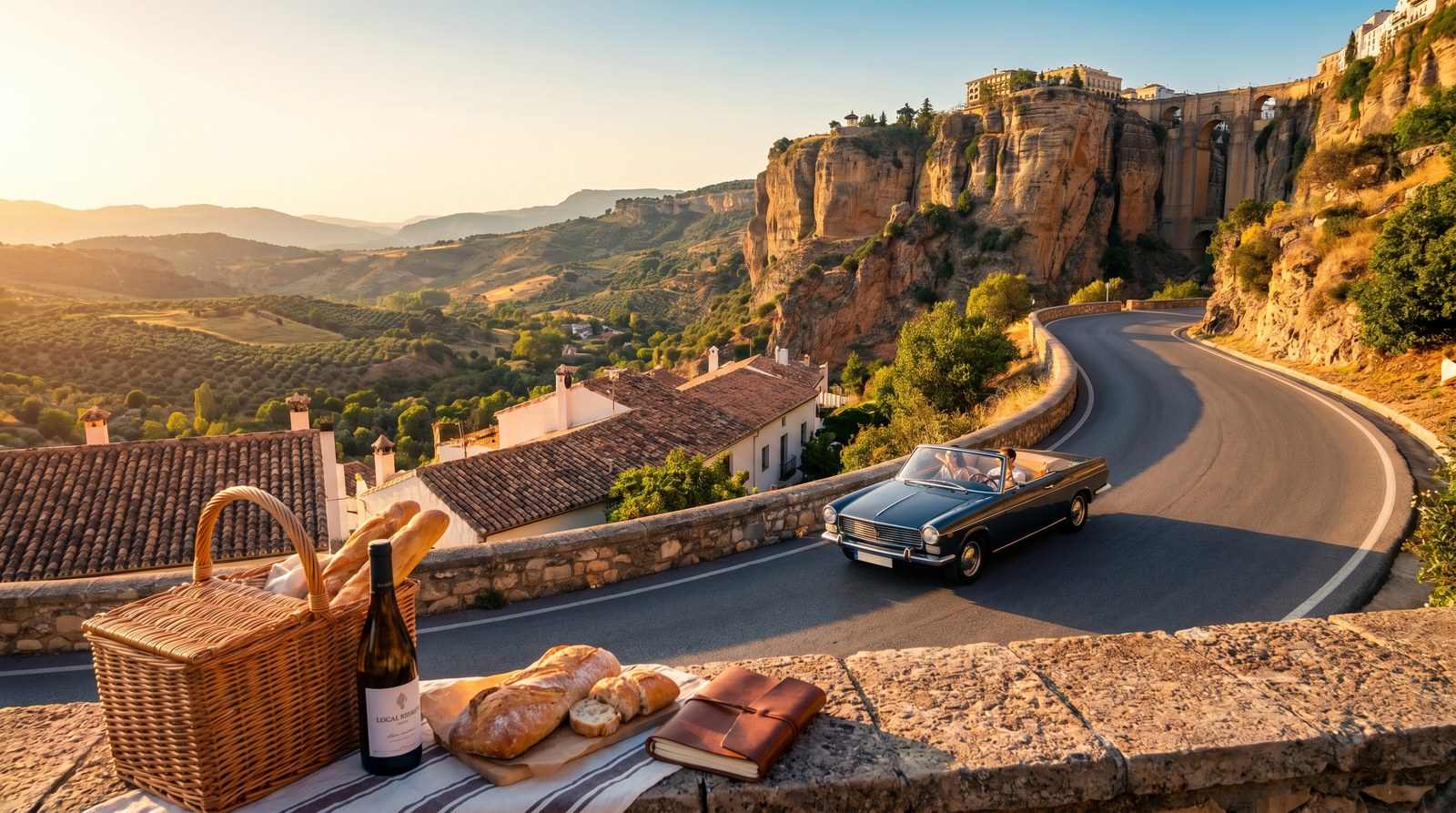
One hour inland from Marbella’s coast, the ancient town of Ronda perches on a limestone plateau, bisected by a 120-metre gorge that has captivated travellers for centuries. This dramatic clifftop setting, combined with layers of Moorish history, Spain’s oldest bullring, and high-altitude vineyards, makes Ronda one of Andalusia’s most rewarding day trips—and an essential counterpoint to the coastal luxury of the Costa del Sol.
Whether you’re seeking cultural immersion, spectacular photography opportunities, or simply a change of scenery from beachfront lounging, a day trip to Ronda from Marbella delivers an authentic slice of inland Andalusia without requiring an overnight stay. Here’s how to make the most of your visit.
Why Ronda Deserves a Place on Your Marbella Itinerary
Ronda is among Spain’s oldest continuously inhabited settlements, with evidence of prehistoric occupation and successive rule by Phoenicians, Romans, Visigoths, and Moors before the Catholic Monarchs captured it in 1485. This layered history is visible in every corner of the old town, from 13th-century Arab baths to Renaissance palaces.
The town sits 750 metres above sea level in the Serranía de Ronda mountain range, offering cooler temperatures than the coast—a welcome respite during Marbella’s summer months. The El Tajo gorge, carved by the Río Guadalevín over millennia, divides the historic La Ciudad quarter from the newer El Mercadillo district, connected by three bridges spanning different eras.
Beyond its dramatic topography, Ronda has earned literary fame. Ernest Hemingway set scenes here in For Whom the Bell Tolls, and Orson Welles’ ashes were scattered on a private estate outside town—testament to the city’s enduring romantic appeal.
The Scenic Route from Marbella to Ronda
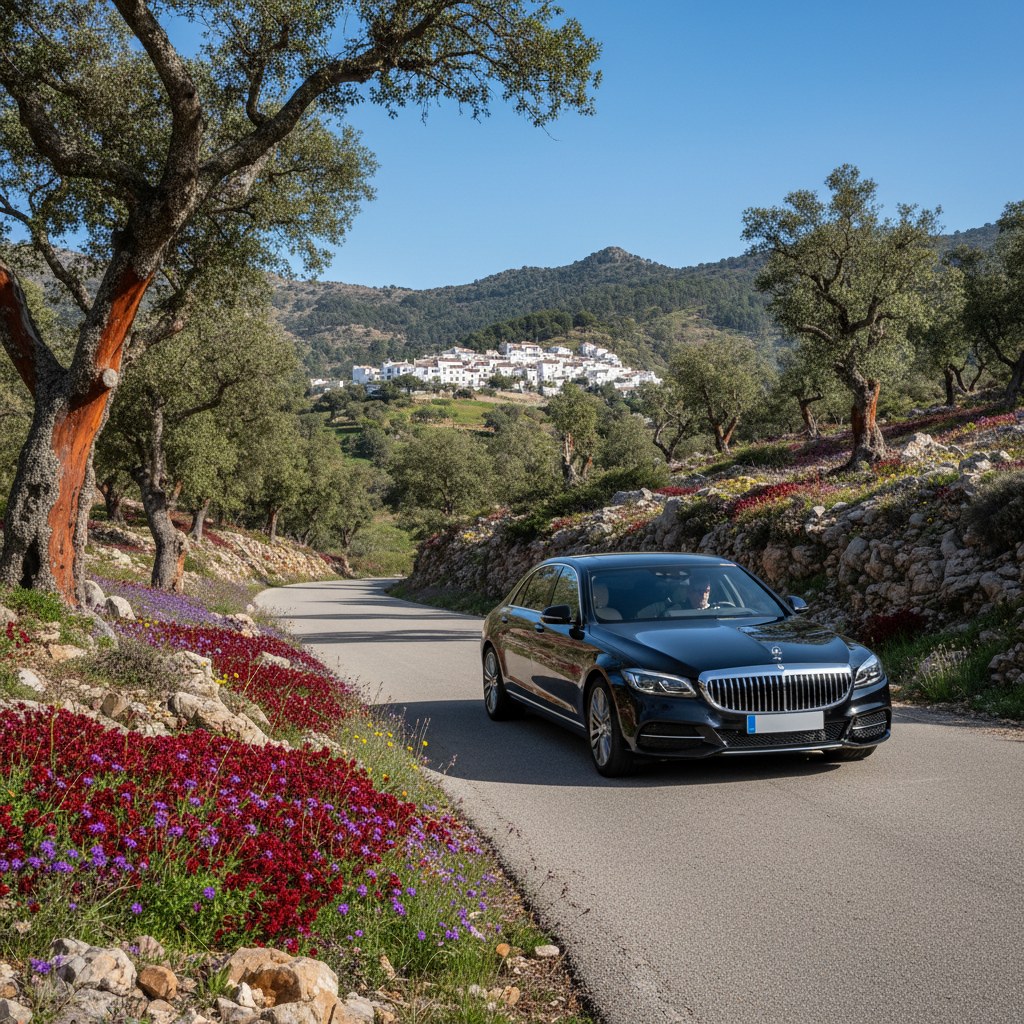
The 57-kilometre drive from Marbella to Ronda takes approximately one hour via the A-397 and A-374 highways, but the journey itself is half the experience. The road climbs steadily through the Sierra de las Nieves, a UNESCO Biosphere Reserve, offering sweeping views of the Andalusian countryside.
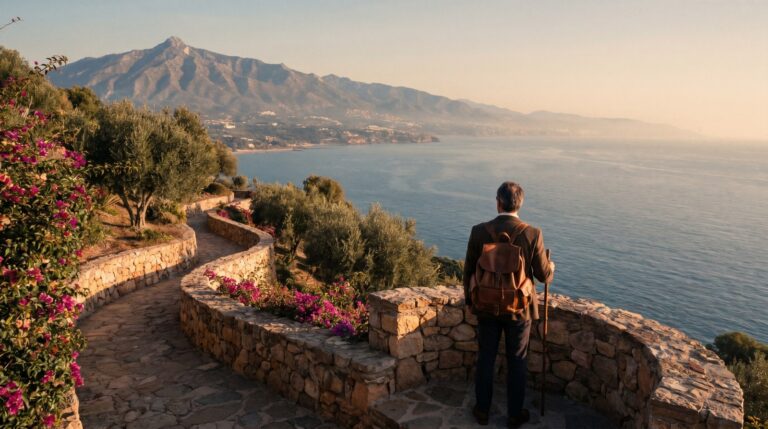
You’ll pass through whitewashed mountain villages including Istán and Ojén, where terraced hillsides give way to cork oak forests and wild olive groves. In spring, the roadsides explode with wildflowers—poppies, lavender, and Spanish broom. Several mirador viewpoints along the route provide perfect photo stops, particularly the lookout just before the final descent into Ronda, where you’ll catch your first glimpse of the town’s clifftop silhouette.
Insider tip: Depart Marbella by 9:00 AM to beat coach tour arrivals and secure parking near the old town. The drive is spectacular in both directions, but morning light favours eastward views on the outbound journey.
For those preferring not to drive, Marbella Hospitality’s concierge service can arrange private chauffeur transfers in a luxury vehicle, allowing you to enjoy the scenery—and the local wine—without concern for navigation or parking.
Puente Nuevo: Ronda’s Iconic New Bridge
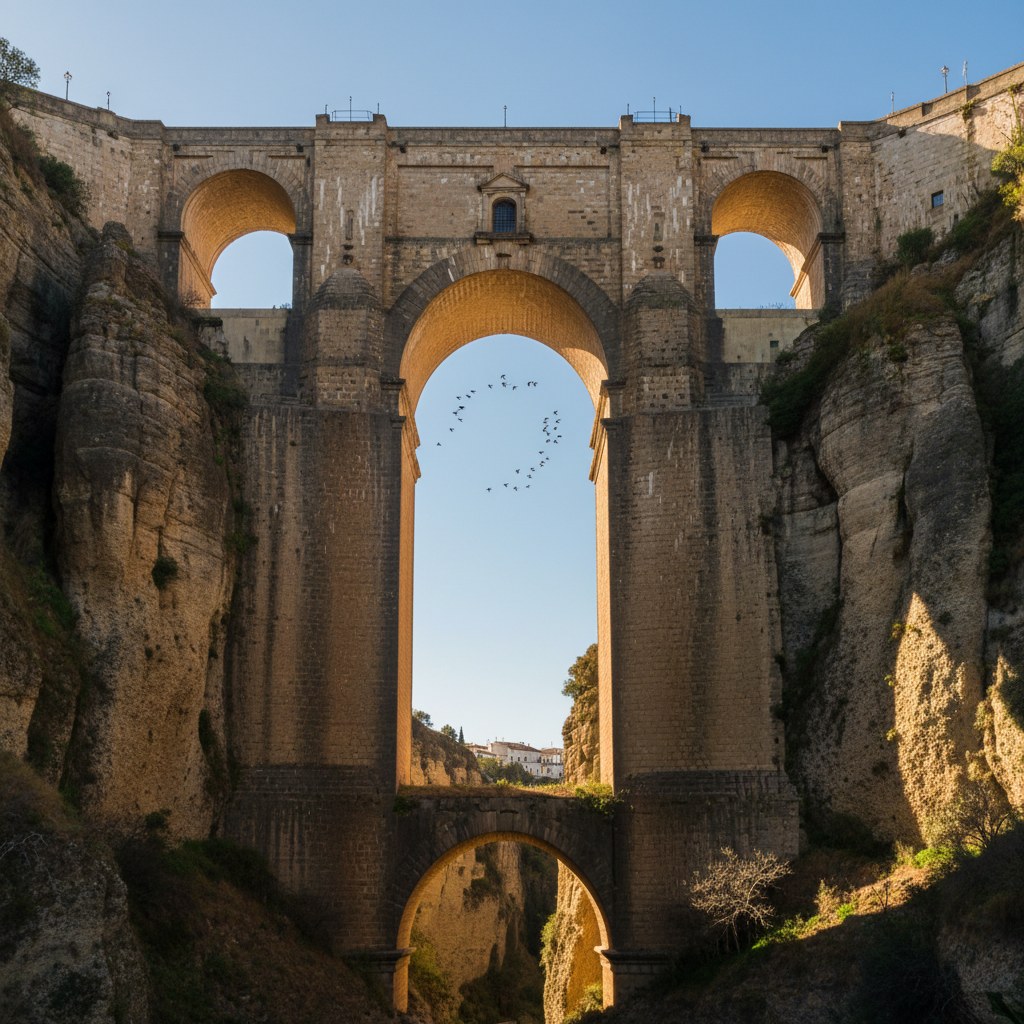
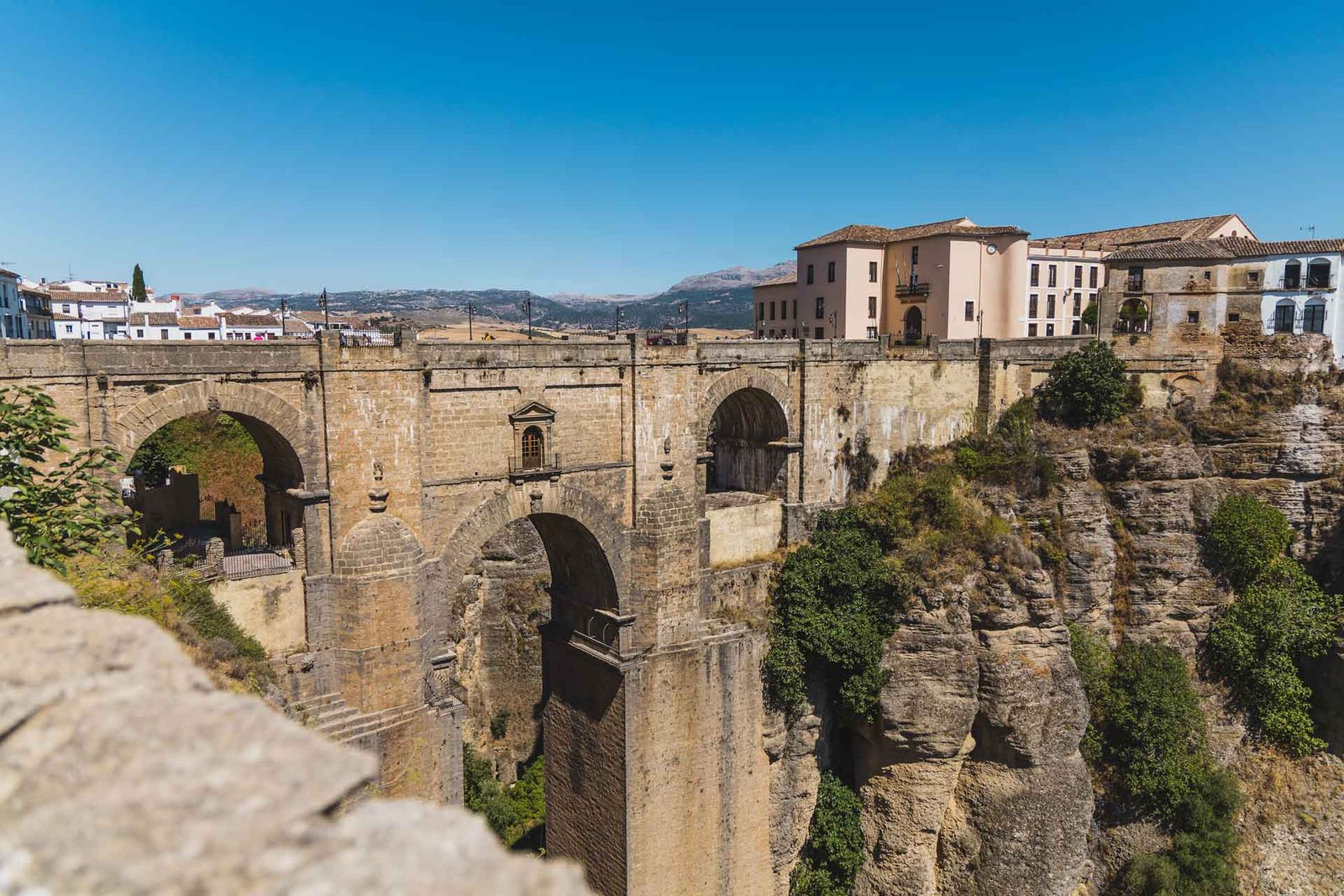
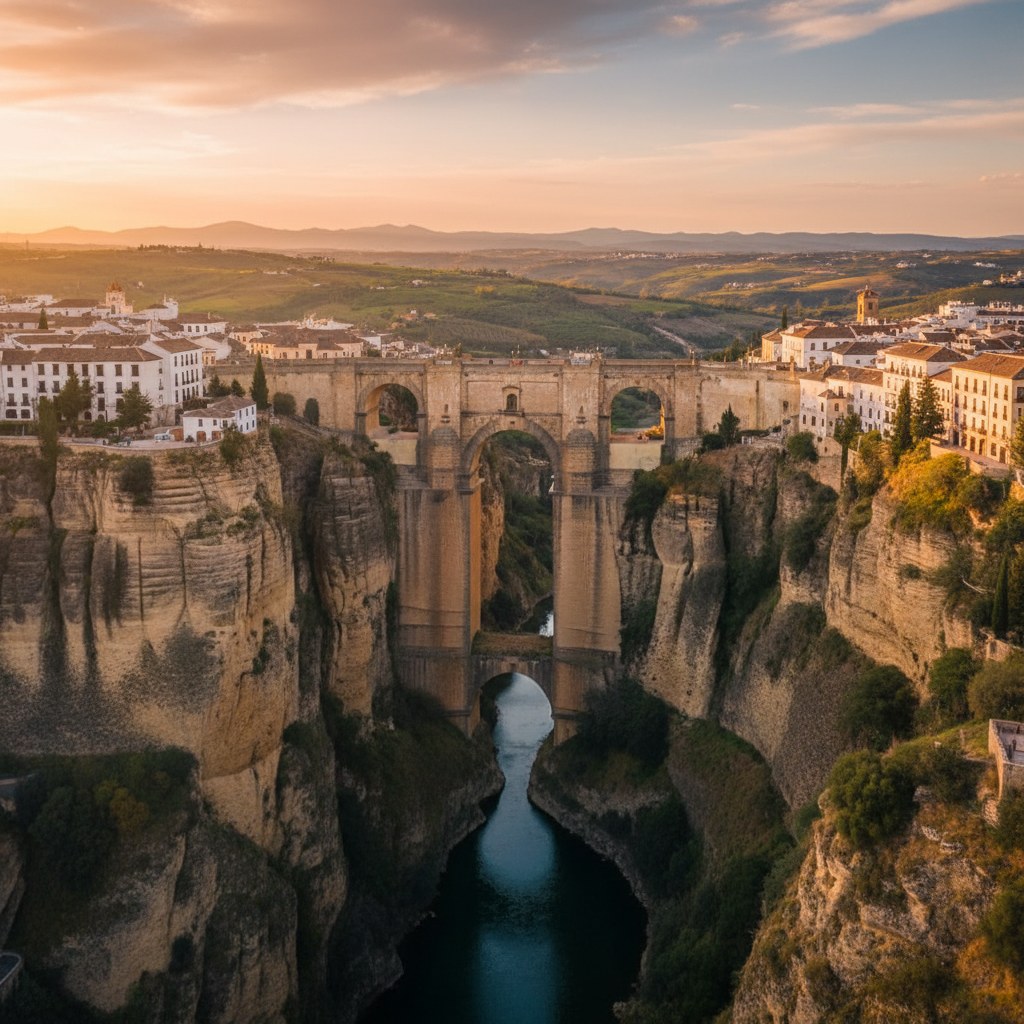
The Puente Nuevo (New Bridge) is Ronda’s defining landmark, though its name is misleading—construction began in 1751 and took 42 years to complete. Designed by architect José Martín de Aldehuela, this engineering marvel stands 98 metres tall and spans the narrowest point of the El Tajo gorge with a single 32-metre arch.
The bridge’s central chamber once served as a prison during the Spanish Civil War, and today houses a small interpretive centre detailing its construction. Fifty workers died during the building process, and legend holds that the architect himself fell to his death while inspecting the completed structure—though historical records dispute this romantic tale.
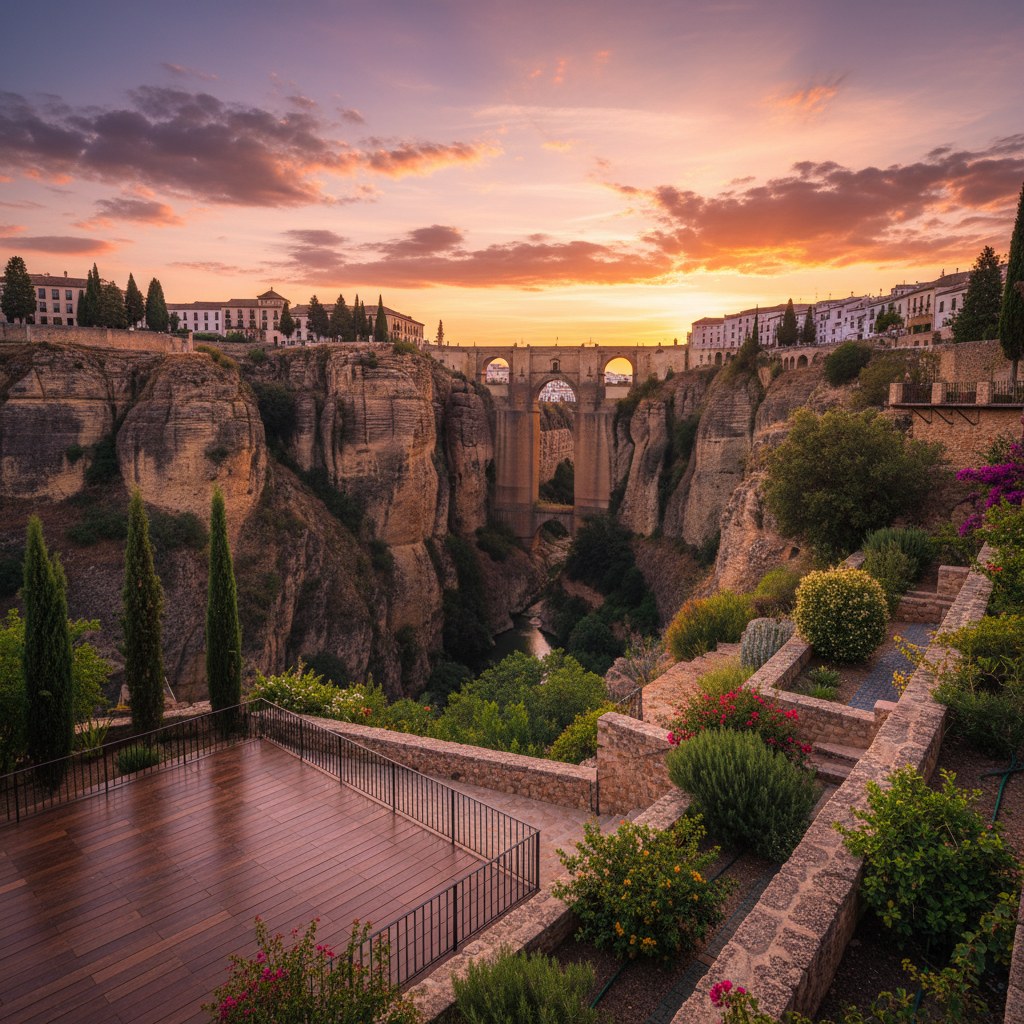
For the most dramatic views, walk to the Jardines de Cuenca on the gorge’s eastern rim, where a series of terraced gardens offers unobstructed perspectives of the bridge against the canyon backdrop. Photographers should visit in late afternoon when golden light illuminates the western cliff face.
Hiking to the Bottom of El Tajo Gorge
While most visitors admire the gorge from above, a steep footpath descends from Plaza de María Auxiliadora to the canyon floor and the Río Guadalevín below. The 15-minute descent (allow 25 minutes to climb back up) reveals the true scale of the Puente Nuevo and offers a completely different perspective on Ronda’s clifftop architecture.
The trail is well-maintained but involves stone steps and can be slippery after rain. At the bottom, you’ll find remnants of old watermills and can walk beneath all three of Ronda’s bridges. The canyon walls support unique microflora, including endemic ferns that thrive in the permanent shade and moisture.
This hike is best undertaken in cooler months—the gorge can be uncomfortably hot in July and August, and the climb back up is strenuous in midday heat.
Plaza de Toros: Spain’s Most Beautiful Bullring
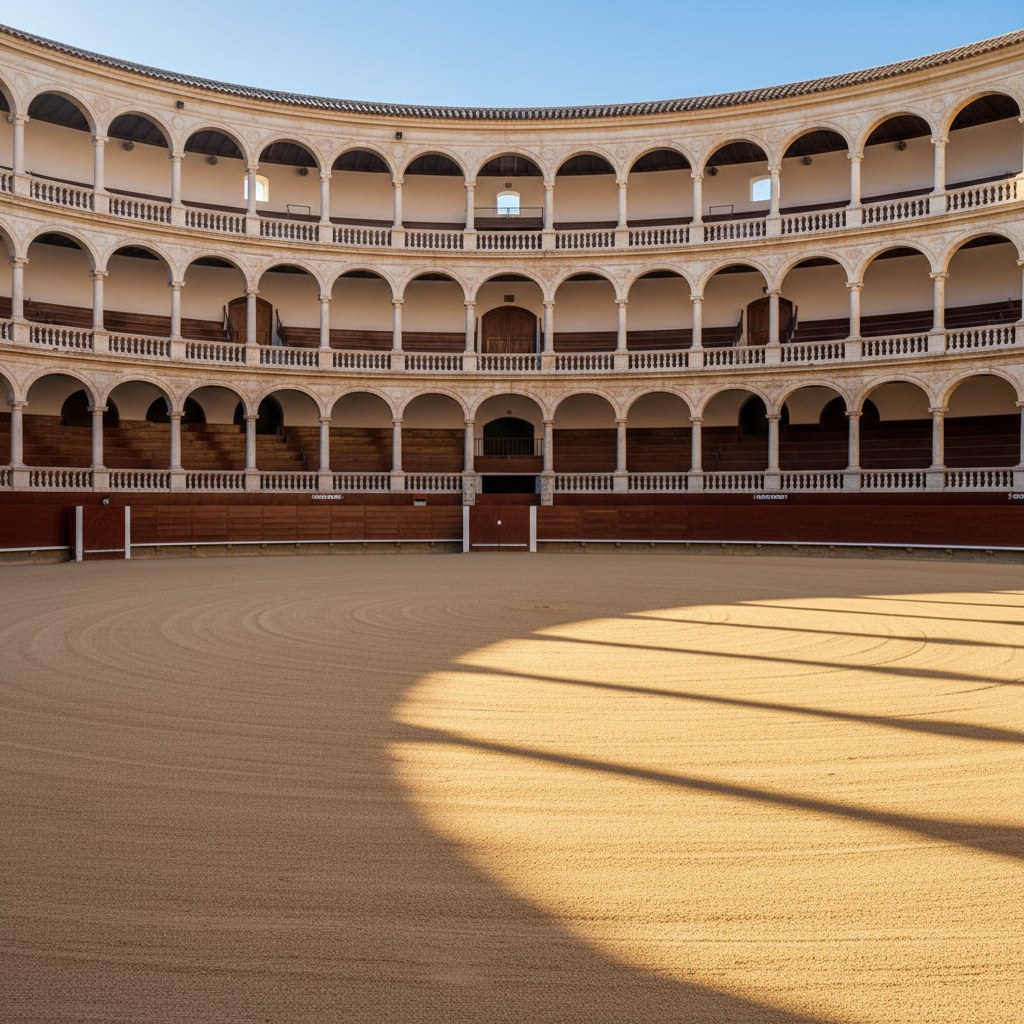
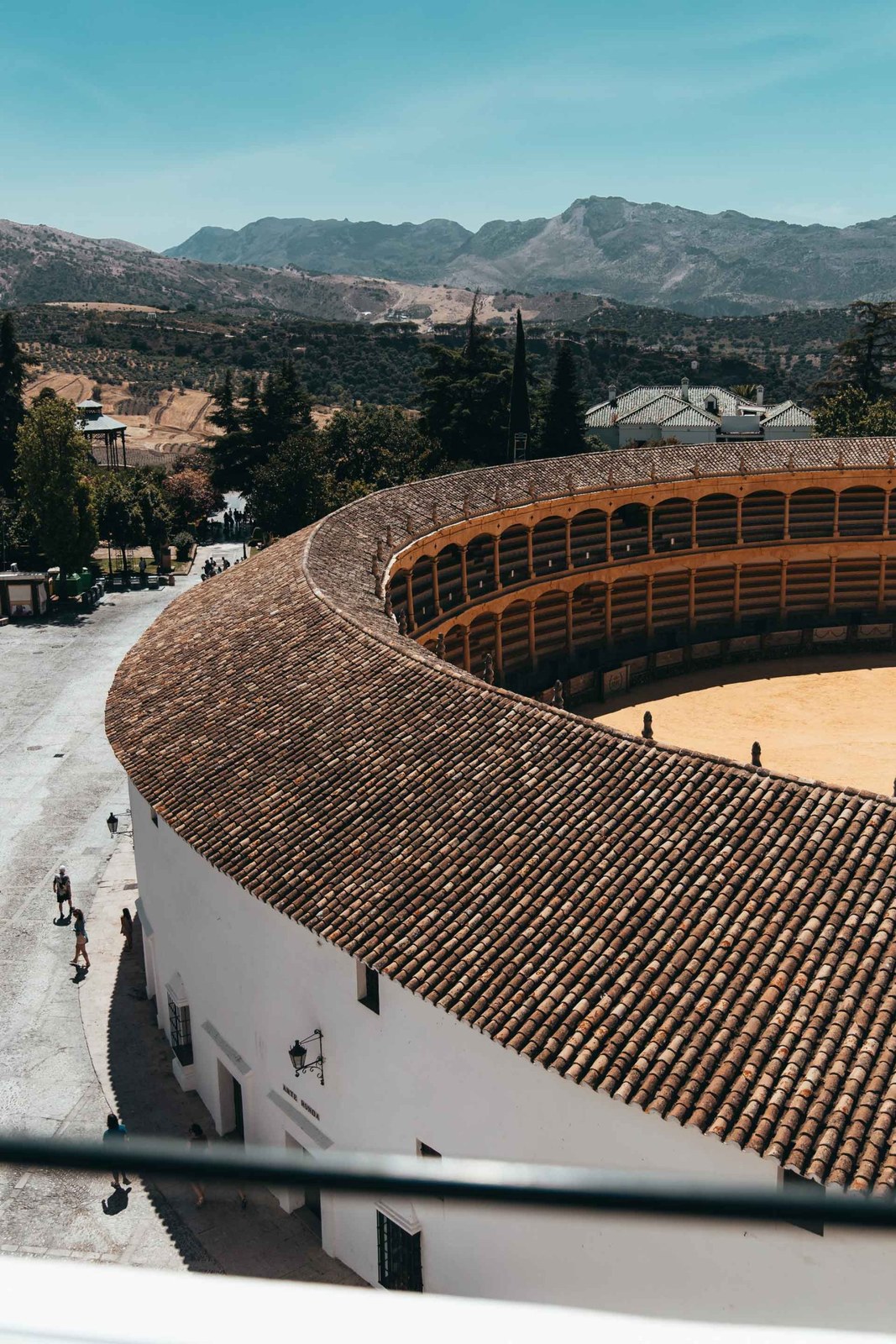
The Real Maestranza de Caballería de Ronda, built in 1785, is widely considered Spain’s most architecturally significant bullring and the spiritual home of modern bullfighting on foot (toreo a pie). The Romero dynasty, particularly Pedro Romero, established many of the rules and techniques still used today.
The neoclassical sandstone structure seats 5,000 spectators in a perfect circle 66 metres in diameter. Even if you have no interest in bullfighting as spectacle, the attached museum offers fascinating insight into this controversial tradition’s role in Spanish culture, displaying elaborate trajes de luces (suits of lights), historical posters, and paintings by Goya.
Corridas are held during Ronda’s Feria de Pedro Romero in early September and the Feria Goyesca, when participants dress in 18th-century costume. Outside these dates, guided tours run throughout the day, providing access to the arena, the royal box, and the stables.
Exploring La Ciudad: Ronda’s Historic Quarter
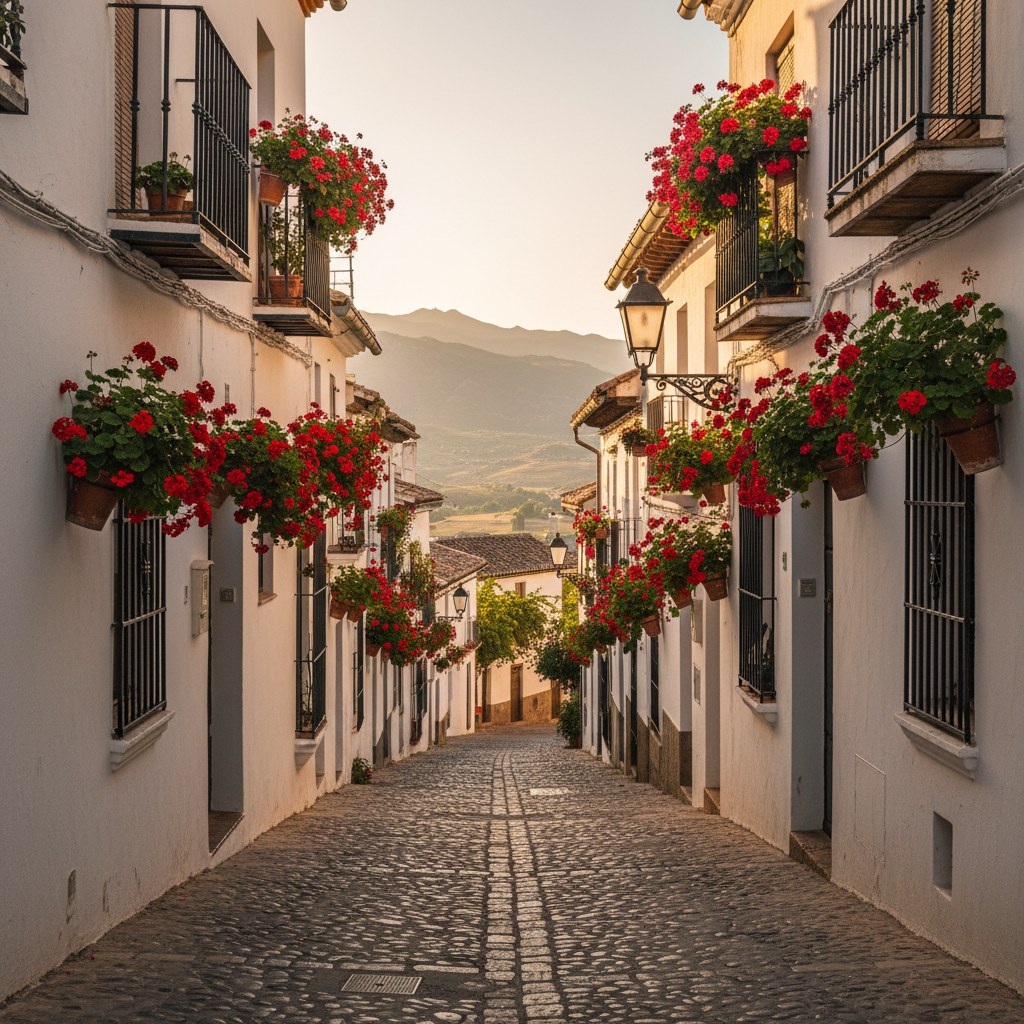
The La Ciudad neighbourhood occupies the original Moorish town on the gorge’s southern side. Its labyrinthine streets, too narrow for cars, wind past whitewashed houses with wrought-iron balconies overflowing with geraniums. This is Ronda at its most atmospheric—particularly in the late afternoon when coach tours have departed.
Key monuments include the Iglesia de Santa María la Mayor, a church built atop Ronda’s main mosque, which retains the original mihrab and horseshoe arches alongside Gothic and Renaissance additions. The Casa del Rey Moro (House of the Moorish King) is actually an 18th-century mansion, but its gardens contain the Mina de Agua, a remarkable 14th-century staircase descending 60 metres through solid rock to a water source at the gorge bottom—a critical resource during medieval sieges.
Wander without a fixed route. The pleasure of La Ciudad lies in discovering hidden plazas, artisan workshops, and unexpected viewpoints over the surrounding countryside.
The Baños Árabes: Ronda’s 13th-Century Moorish Baths
Tucked below the Puente Árabe (Arab Bridge), the Baños Árabes are among the best-preserved Moorish bathhouses in Spain. Dating to the 13th century, these subterranean chambers feature star-shaped skylights in vaulted brick ceilings, horseshoe arches, and the classic caldarium, tepidarium, and frigidarium sequence borrowed from Roman tradition.
The baths were part of a larger complex that included a mosque and palace, serving both hygienic and social functions. Water was heated by an underfloor hypocaust system, and the star openings allowed light and steam to circulate while maintaining privacy.
The site is small but atmospheric, and entry is inexpensive. Informational panels (in Spanish and English) explain the bathing rituals and the baths’ role in Moorish daily life. Visit in the morning when natural light streams through the ceiling apertures most dramatically.
Jardines de Cuenca: A Peaceful Gorge-Side Retreat
For a respite from the old town’s crowds, the Jardines de Cuenca offer shaded pathways along the eastern gorge rim with some of Ronda’s finest views. These terraced gardens were created in the 1970s and feature Mediterranean plantings—oleander, cypress, and native pines—alongside fountains and viewing platforms.
A small museum at the entrance chronicles Ronda’s relationship with the surrounding landscape through historical photographs and geological exhibits. The gardens connect to the trail descending into the gorge, making them a logical starting point for the canyon hike.
Benches beneath ancient trees provide perfect spots to rest and photograph the Puente Nuevo from angles impossible elsewhere in town. The gardens are free to enter and open from dawn to dusk.
Wine Tasting in the Serranía de Ronda
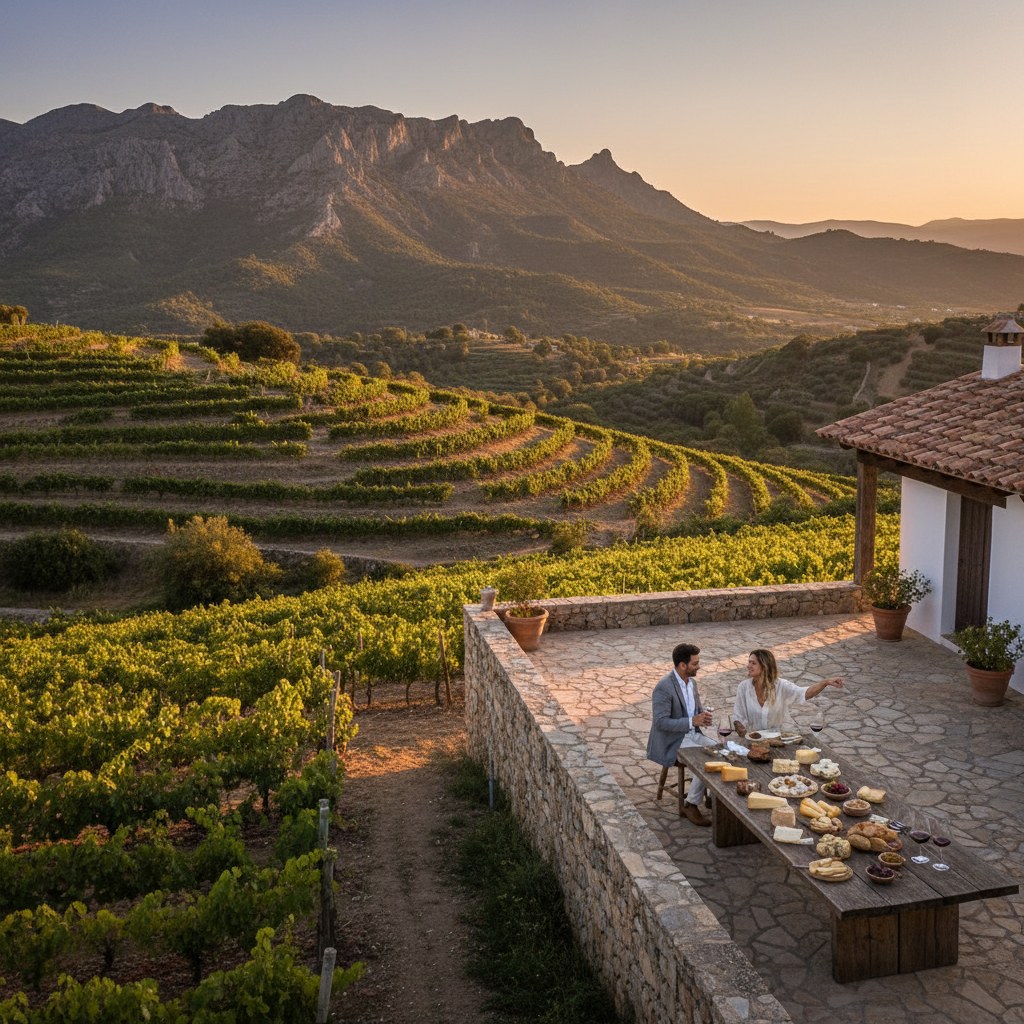
The Serranía de Ronda wine region, granted DO status in 2018, has experienced a renaissance in recent years. High-altitude vineyards (600-900 metres) benefit from significant diurnal temperature variation, producing elegant reds from Tempranillo, Syrah, and Cabernet Sauvignon, plus crisp whites from Chardonnay and Moscatel.
Several bodegas welcome visitors by appointment, including Bodega Descalzos Viejos near the village of Ronda, which produces organic wines in a converted 16th-century convent, and F. Schatz, a German-founded estate known for its Pinot Noir—rare in Andalusia. Tastings typically include four to six wines paired with local cheeses and charcuterie, often accompanied by vineyard tours.
Planning note: Most bodegas require advance booking and close on Sundays. If wine touring is a priority, consider extending your visit to include lunch at a vineyard restaurant—several offer spectacular views across the valley toward the Sierra de Grazalema.
The Marbella Hospitality team can arrange private wine tours with English-speaking guides and transportation, allowing you to sample freely without driving concerns.
Practical Tips for Your Ronda Day Trip
A well-planned visit to Ronda requires five to seven hours to see the main sights without rushing. Arrive by 10:00 AM to beat the midday tour bus influx, which peaks between noon and 3:00 PM. Parking is available at Parking Plaza del Socorro near the bullring (€1.50/hour) or the larger underground Parking Virgen de la Paz on the town’s western edge.
Key considerations:
- Footwear: Cobblestone streets and the gorge trail demand comfortable walking shoes—leave the heels in Marbella.
- Timing: Summers are hot (regularly exceeding 35°C); spring and autumn offer ideal conditions. Winter can be surprisingly cold due to the altitude.
- Dining: Lunch service runs 1:30-4:00 PM. Book ahead at popular restaurants like Tragata or Bardal (Michelin-starred). For casual fare, the tapas bars around Plaza del Socorro offer excellent value.
- Siesta closures: Many shops and minor monuments close 2:00-5:00 PM. Plan museum visits for morning or late afternoon.
If you’re staying in one of the luxury villas we manage in areas like Nueva Andalucía or Ojén, Ronda makes an excellent midweek excursion, offering cultural depth that complements the coastal lifestyle.
Beyond Ronda: Combining Your Day Trip
Ronda sits at the heart of the Pueblos Blancos (White Villages) route, a scenic circuit through mountain hamlets that exemplify traditional Andalusian architecture. If time permits, the return journey to Marbella can incorporate stops at Grazalema (Spain’s wettest town, set in a dramatic natural park) or Zahara de la Sierra, a hilltop village overlooking a turquoise reservoir.
Alternatively, history enthusiasts might detour to the Cueva de la Pileta, a cave system 20 kilometres southwest containing Paleolithic paintings dating to 20,000 BC—less famous than Altamira but equally impressive and far less crowded. Guided tours run twice daily and must be booked in advance.
For those interested in another exceptional day trip, our guide to Gibraltar’s top attractions offers a contrasting British Overseas Territory experience just 90 minutes from Marbella.
Why Book Your Ronda Experience with Marbella Hospitality
Planning a day trip to Ronda from Marbella involves more than simply driving an hour inland. Our concierge team arranges every detail—from private chauffeur service in luxury vehicles to pre-booked restaurant reservations at Ronda’s most sought-after tables and exclusive bodega tours with English-speaking sommeliers. We ensure you experience the best of this historic town without the stress of logistics, parking, or language barriers, delivering the seamless, high-quality service our guests expect across all our offerings.
Make Ronda Part of Your Marbella Story
A day trip to Ronda provides the perfect counterbalance to Marbella’s beachfront glamour—trading beach clubs and yacht charters for ancient bridges and mountain vistas. The journey itself, winding through the Sierra de las Nieves, offers a glimpse of inland Andalusia’s timeless beauty, while Ronda’s layered history and dramatic setting create memories that linger long after you’ve returned to the coast.
Whether you’re photographing the Puente Nuevo at sunset, descending into the El Tajo gorge, or sampling high-altitude wines overlooking terraced vineyards, Ronda delivers an authentic Spanish experience within easy reach of your Marbella base. Contact our team to arrange a tailored Ronda excursion with private transport, expert guides, and exclusive access that transforms a simple day trip into an unforgettable journey through Andalusia’s cultural heartland.