Just ninety minutes south of Marbella, the whitewashed town of Tarifa sits at the southernmost tip of continental Europe, where the Atlantic Ocean meets the Mediterranean Sea. This historic coastal gem offers a striking contrast to Marbella’s polished glamour—think wild, windswept beaches, medieval cobblestone lanes, and some of the continent’s best kitesurfing conditions. Whether you’re craving a day of adventure sports, cultural exploration, or simply a change of scenery from the Costa del Sol, a day trip to Tarifa delivers an authentic Andalusian experience that feels worlds away from the manicured resorts of the coast.
The drive itself is half the appeal. The A-7 coastal motorway winds through rolling hills dotted with cork oak forests, past traditional white villages, and along dramatic clifftop vistas. Most visitors make the journey in a rental car or private chauffeur, allowing flexibility to stop at scenic viewpoints or detour to nearby attractions like the hilltop town of Castellar de la Frontera.
Why Tarifa Should Be on Your Marbella Itinerary
Tarifa’s appeal lies in its authenticity and natural beauty. Unlike the heavily developed stretches of coastline closer to Marbella, Tarifa has retained much of its traditional character—a working fishing port, a thriving local culture, and beaches that remain refreshingly uncommercialized. The town’s position at the Strait of Gibraltar, where two seas and two continents converge, creates unique wind patterns that have made it Europe’s undisputed capital of wind and kitesurfing.
The town also serves as a gateway to Africa. On clear days, the Moroccan coastline is visible across the strait, and fast ferries to Tangier depart regularly from Tarifa’s port, making it possible to add a second continent to your day trip if you’re feeling adventurous.
Insider tip: Tarifa operates on a different rhythm than Marbella. Restaurants often don’t open for lunch until 2 PM, and the town comes alive in the evening when locals pour into the tapas bars around Plaza de Santa María. Plan your visit accordingly.
Exploring Tarifa’s Medieval Old Town
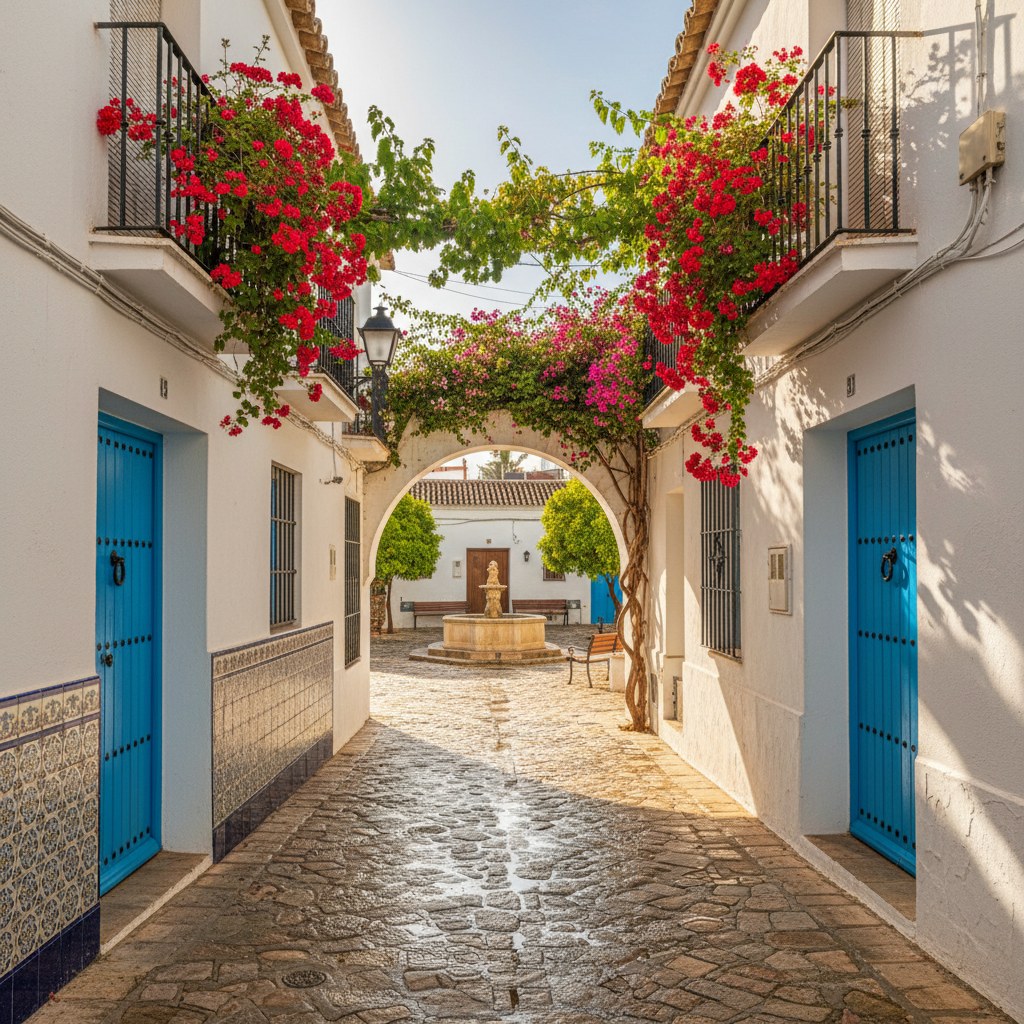
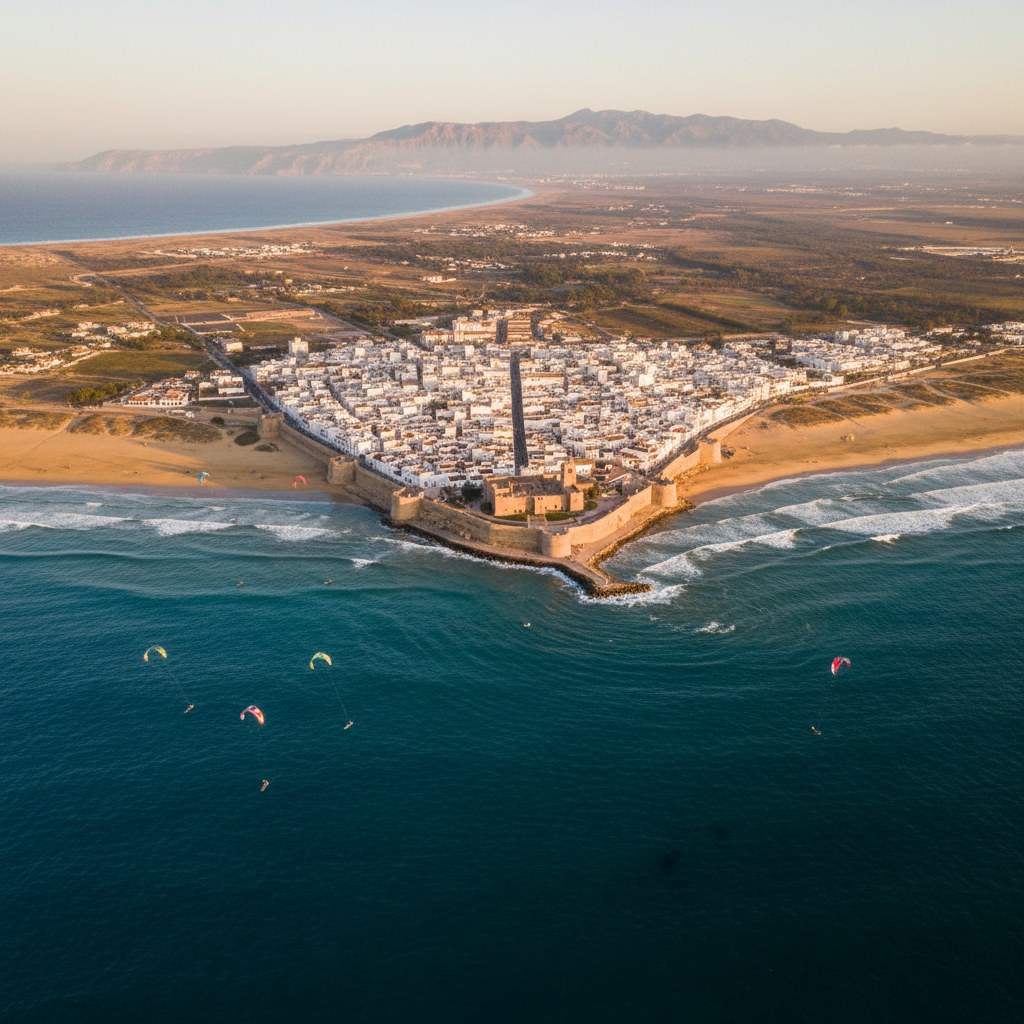
The heart of Tarifa is its beautifully preserved casco antiguo, a maze of narrow streets enclosed by medieval walls. Enter through the Puerta de Jerez, the last remaining of the town’s four original gates, and you’ll step into a world of whitewashed houses adorned with ceramic tiles, wrought-iron balconies overflowing with geraniums, and hidden plazas where locals gather for morning coffee.
The Old Town’s architecture reflects centuries of layered history—Roman foundations, Moorish fortifications, and Christian additions all coexist in harmony. Plaza de Santa María anchors the historic quarter, home to the 15th-century Church of San Mateo with its distinctive octagonal bell tower. Nearby, Plaza San Hiscio offers a quieter retreat, lined with boutique shops selling everything from handmade leather goods to contemporary ceramics by local artisans.
The streets radiating from these squares are dotted with bohemian cafés, vintage clothing stores, and galleries showcasing work by the artists and surfers who have made Tarifa their home. Calle Sancho IV el Bravo, the main pedestrian thoroughfare, is particularly atmospheric in the late afternoon when golden light filters through the narrow passages.
Castillo de Guzmán el Bueno
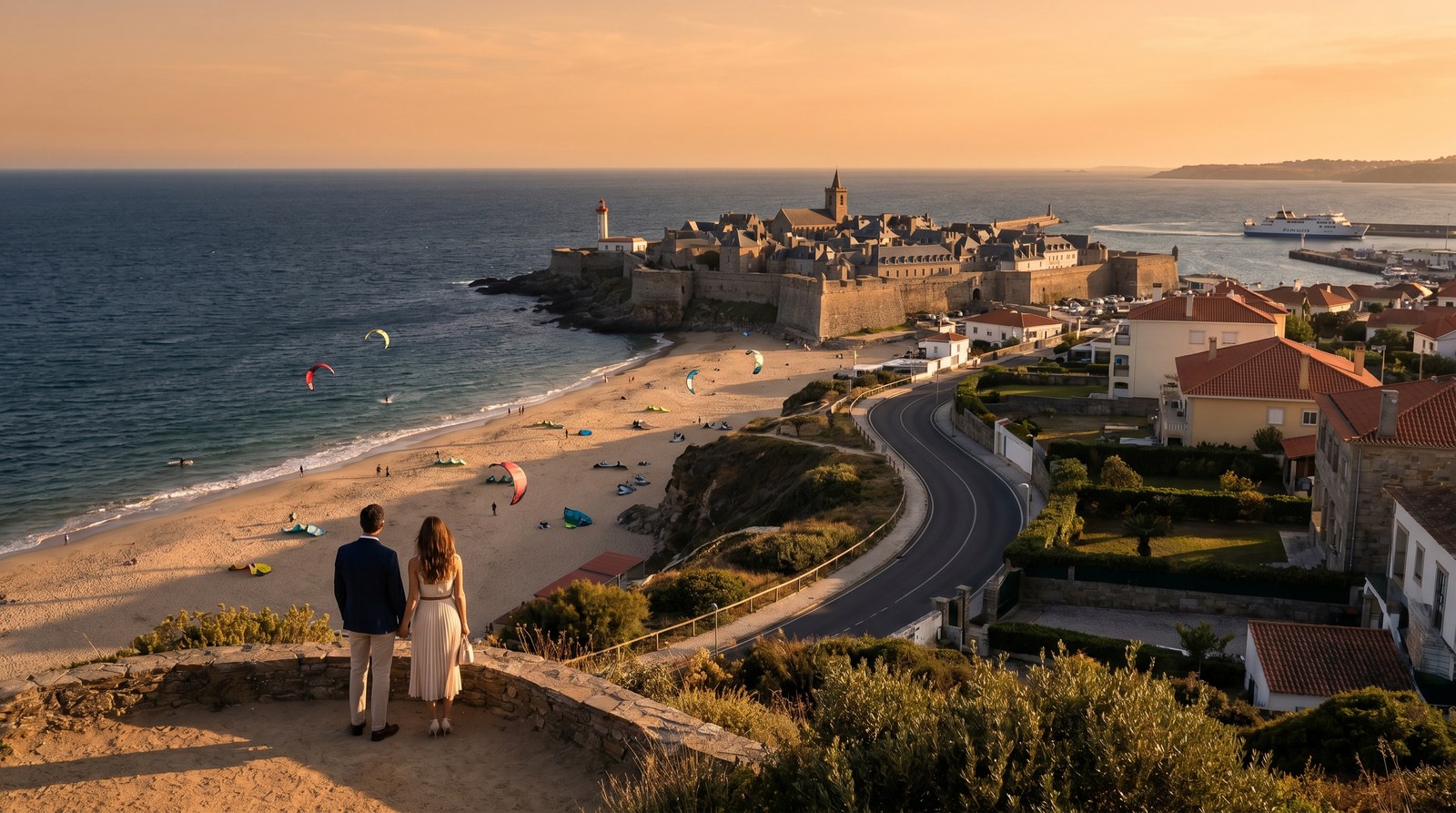
Dominating Tarifa’s waterfront, the Castillo de Guzmán el Bueno is a Moorish fortress dating to 960 AD. Named after Alonso Pérez de Guzmán, the Spanish nobleman who famously defended the castle during the 1294 siege—even after the besiegers threatened to kill his captured son—the fortress is a powerful symbol of medieval Spanish valor.
The castle is open to visitors and offers panoramic views from its ramparts across the strait to Morocco. The interior courtyard and defensive towers provide tangible connections to Tarifa’s strategic military importance during centuries of conflict between Christian and Moorish kingdoms. Admission is modest (typically under €5), and the site is rarely crowded, allowing for contemplative exploration.
Castillo de Santa Catalina
Perched on a rocky outcrop overlooking Playa de Los Lances, the Castillo de Santa Catalina appears medieval but was actually constructed in 1931 as an observation tower. Its design deliberately echoes 16th-century Mudéjar architecture, complete with crenellated walls and corner balconies offering sweeping views of both the Atlantic and Mediterranean.
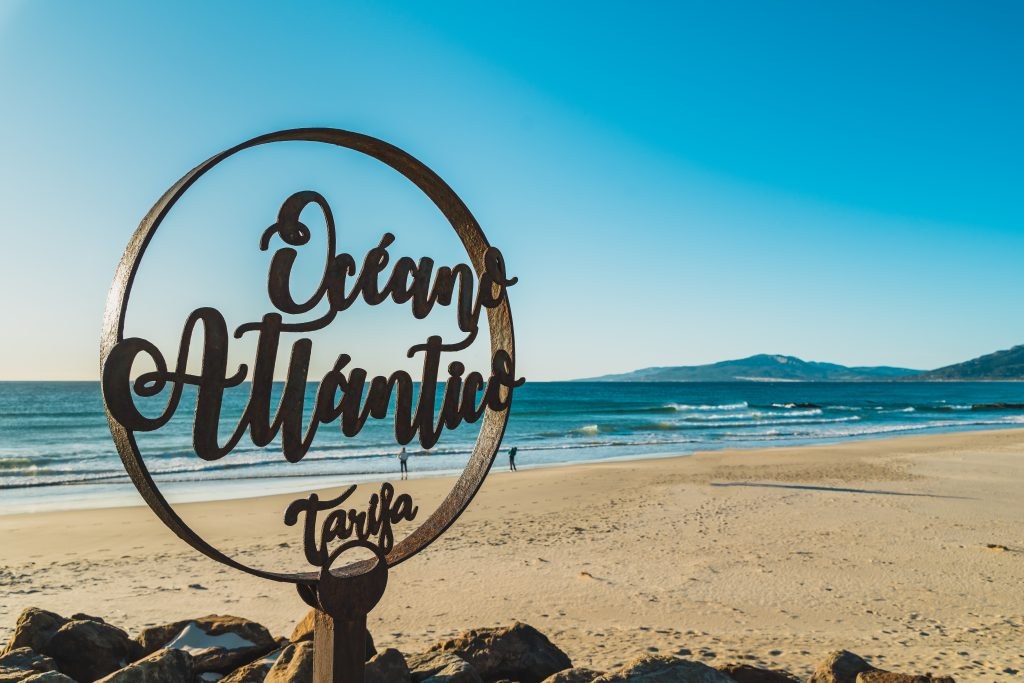
The castle sustained damage during the Spanish Civil War and, while restored in the 1970s, remains closed to the public. Nevertheless, it’s worth the short walk from town for exterior photographs and the exceptional beach views from the surrounding headland.
Tarifa’s Spectacular Beaches
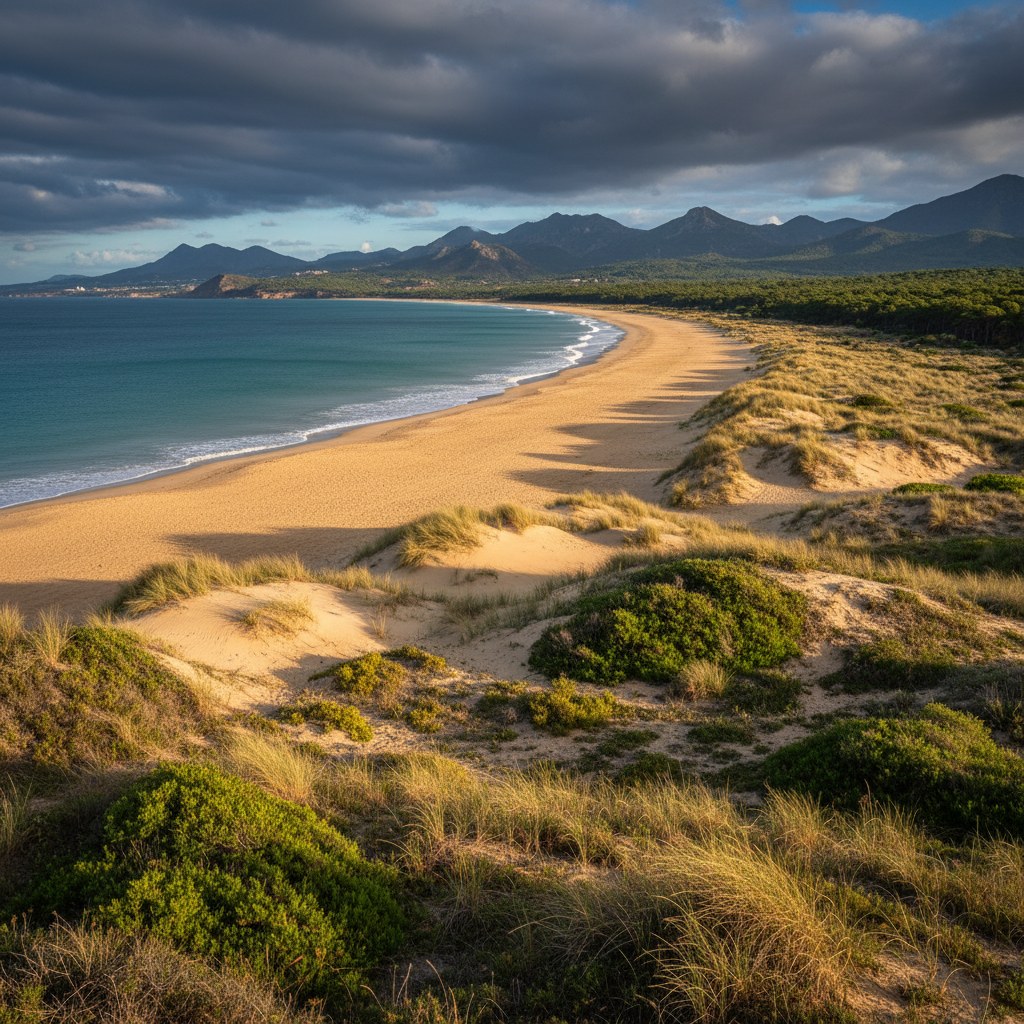
Tarifa’s coastline is nothing short of spectacular—miles of pale golden sand backed by rolling dunes and the dark green forest of Parque Natural de Los Alcornocales. The beaches here feel wild and elemental, shaped by the relentless winds that blow through the strait. While this makes them less suitable for traditional sunbathing than Marbella’s sheltered coves, it creates ideal conditions for wind sports and attracts a younger, more active crowd.
Playa de Los Lances
Playa de Los Lances stretches for over seven kilometers along Tarifa’s western edge, a vast expanse of fine sand that never feels crowded even in high summer. The beach is divided into two sections: Los Lances Norte (closer to town) and Los Lances Sur (extending toward Punta Paloma). Both sections benefit from the alternating Poniente (westerly) and Levante (easterly) winds, making this one of Europe’s most consistent kitesurfing destinations.
The northern section offers easier access, with beach bars like Tangana and Surfing Tarifa providing sun loungers, fresh seafood, and cold beer. The southern stretch becomes progressively wilder and more beautiful, backed by protected dune systems where you might spot chameleons basking on the vegetation.
Playa de Valdevaqueros
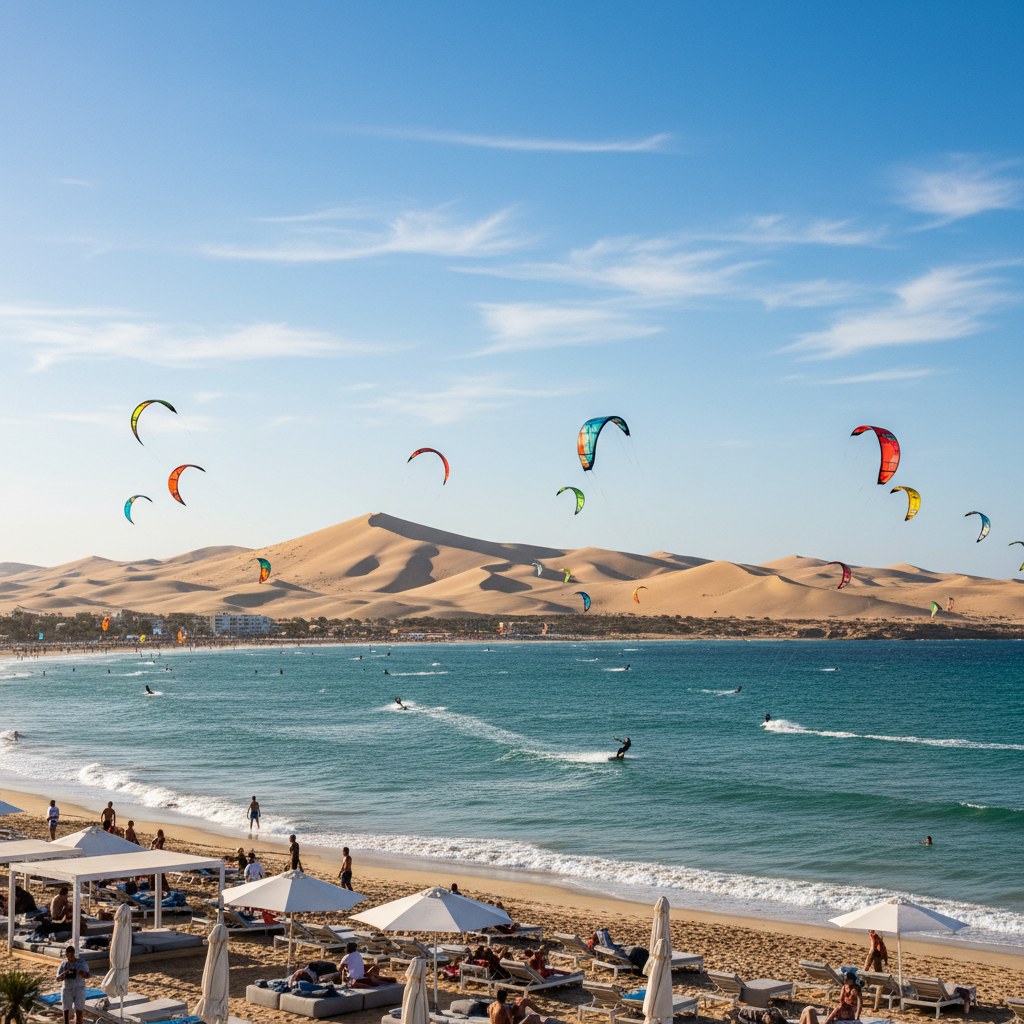
Arguably Tarifa’s most iconic beach, Valdevaqueros sits approximately 10 kilometers northwest of town beneath the dramatic dunes of Punta Paloma. This is ground zero for the international kitesurfing scene—on windy days, the sky fills with dozens of colorful kites, and the beach hums with the energy of riders, instructors, and spectators.
The beach is well-organized, with clearly marked zones for kitesurfing, windsurfing, and swimming to ensure safety. Several beach clubs line the sand, including the popular Tumbao Beach and Hurricane Hotel, both serving excellent Mediterranean cuisine and tropical cocktails with front-row views of the action. The vibe is decidedly laid-back and international—you’ll hear German, French, English, and Spanish spoken in equal measure.
Zahara de los Atunes
For a quieter beach experience, continue 30 kilometers northwest to Zahara de los Atunes, a small fishing village with one of the coast’s most pristine beaches. This six-kilometer stretch of golden sand and crystalline water has earned Blue Flag status for its exceptional cleanliness and environmental management.
Zahara’s beach is ideal for families—the waters are calmer than Tarifa’s exposed coastline, and the gentle slope makes it safe for children. The village itself retains authentic charm, with traditional seafood restaurants serving the local specialty: atún de almadraba, bluefin tuna caught using ancient sustainable fishing methods. Parking can be challenging in summer; consider arriving early or taking a taxi from Tarifa.
Adventure Activities and Outdoor Experiences
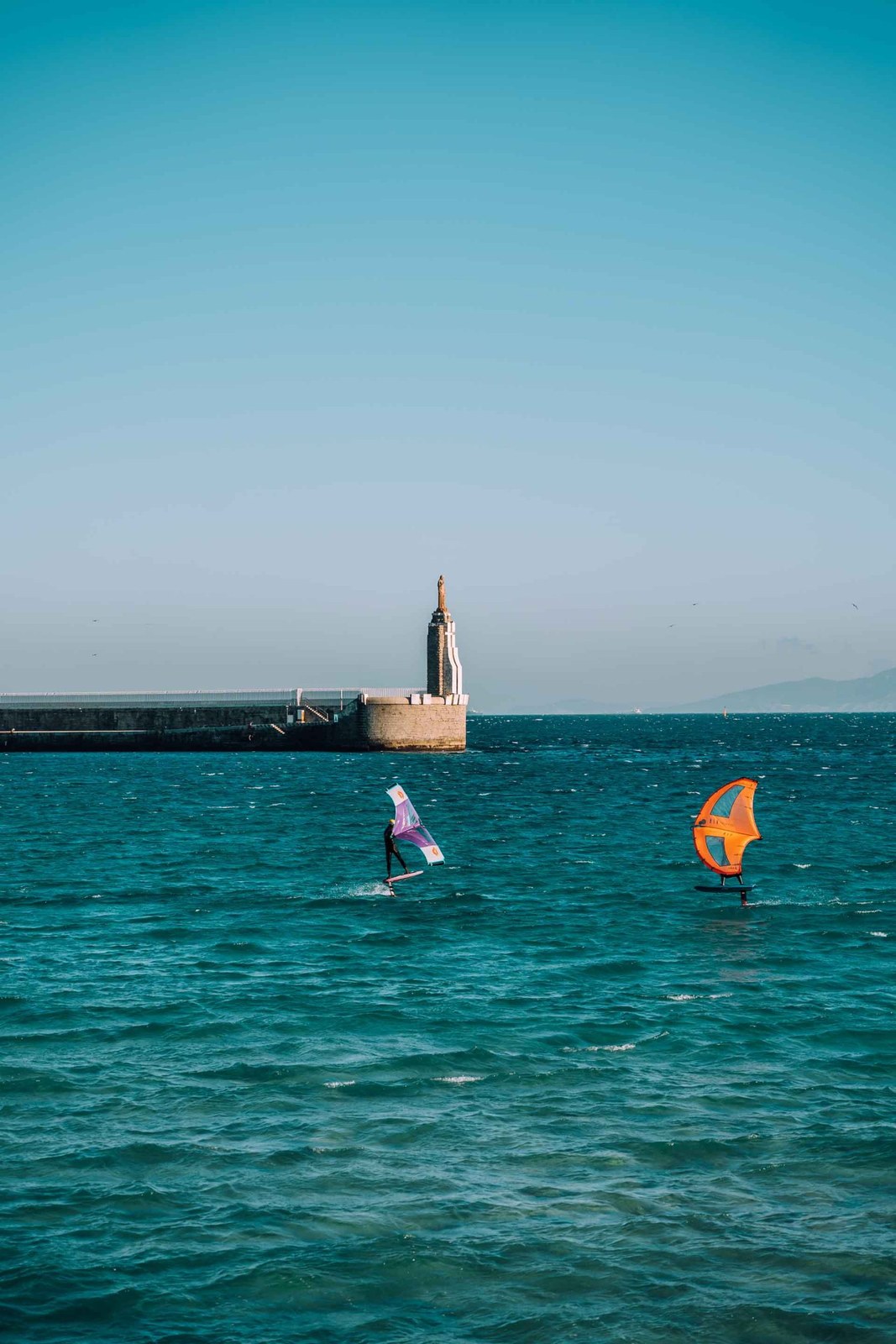
Tarifa’s natural setting makes it an outdoor enthusiast’s paradise. Beyond the beaches, the surrounding protected areas offer hiking, mountain biking, and wildlife encounters that showcase Andalusia’s remarkable biodiversity.
Kitesurfing and Windsurfing
Tarifa’s reputation as the kitesurfing capital of Europe is well-deserved. The town benefits from two dominant wind systems: the Poniente (westerly Atlantic wind) and the Levante (easterly Mediterranean wind), which blow with remarkable consistency from April through October. Wind speeds typically range from 15 to 35 knots, with the Levante being stronger and more challenging.
Beginners should focus on Playa de Los Lances, where numerous schools offer instruction in multiple languages. Reputable operators include Spin Out, Free Your Mind, and ION CLUB, all providing equipment rental, storage, and courses ranging from two-hour introductions to week-long intensive programs. Most schools offer small-group instruction (maximum four students per instructor) and will match you to appropriate conditions based on your skill level.
Experienced riders gravitate toward Valdevaqueros, where stronger winds and more challenging conditions allow for advanced maneuvers and jumps. The beach’s eastern end, known as Balneario, is reserved for expert riders due to strong currents and offshore winds.
Practical note: Even in summer, the wind can make Tarifa feel surprisingly cool. Bring a windbreaker and layers, especially if you’re planning to spend the day on the beach watching the action rather than participating.
Whale and Dolphin Watching
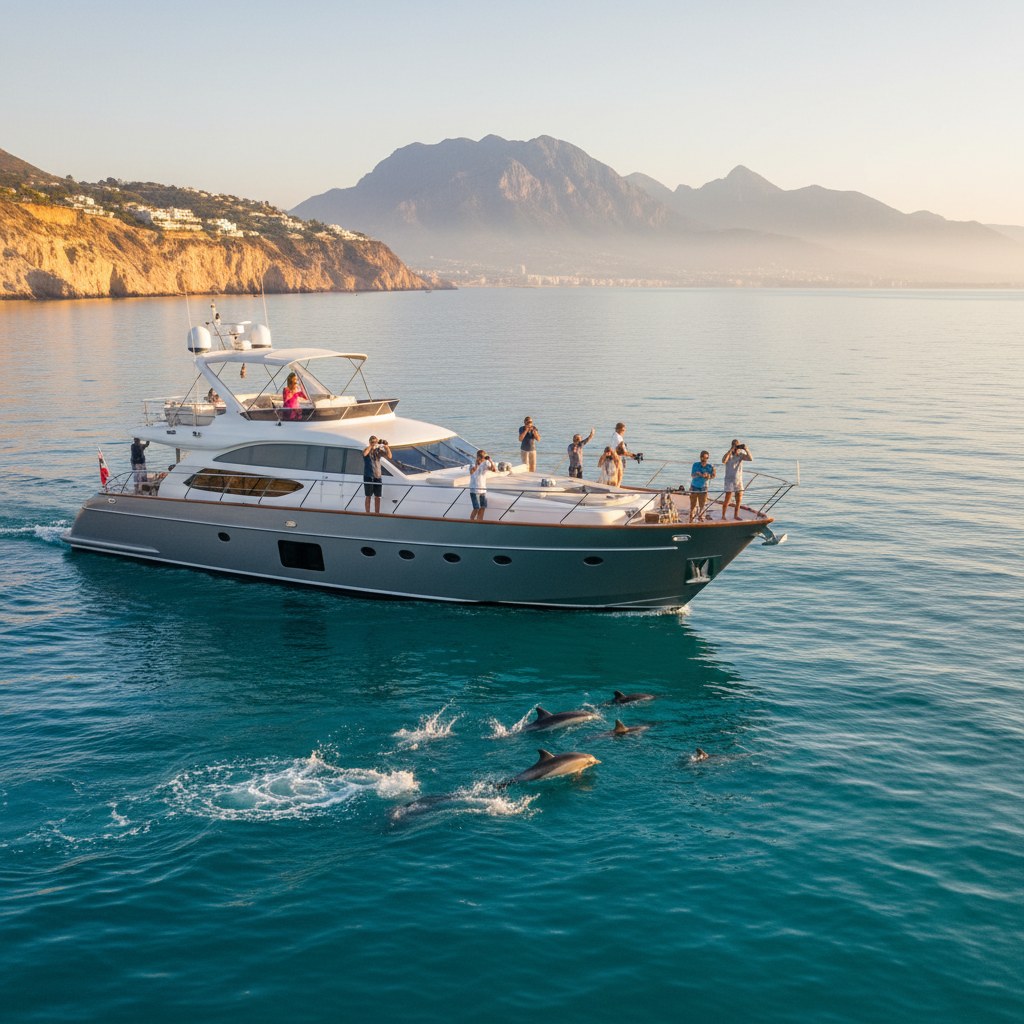
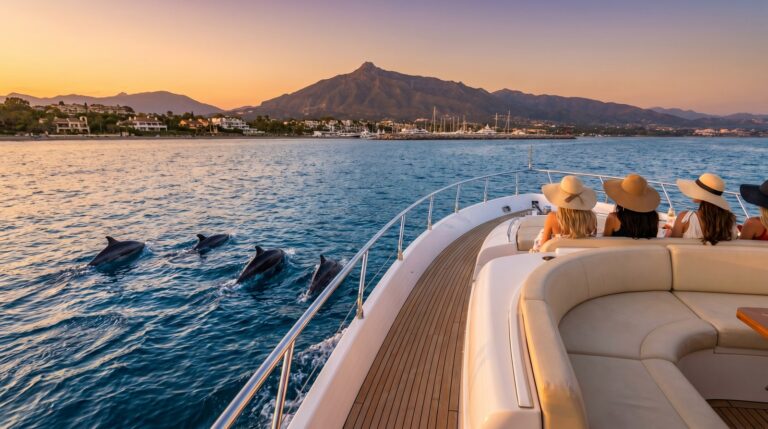
The Strait of Gibraltar is one of Europe’s premier locations for marine mammal observation. The nutrient-rich waters where the Atlantic and Mediterranean meet attract seven species of cetaceans, including bottlenose dolphins, pilot whales, sperm whales, and—during migration seasons—orcas following the bluefin tuna runs.
Several operators run daily excursions from Tarifa’s harbor, with Firmm (Foundation for Information and Research on Marine Mammals) and Turmares being the most reputable. Tours typically last two to three hours and operate from April through October, when sighting rates exceed 90%. The boats maintain respectful distances from the animals, and on-board marine biologists provide educational commentary.
Orca sightings are most likely in July and August, when these apex predators follow the tuna through the strait. Witnessing a pod of orcas hunting in the wild is an unforgettable experience that rivals anything you’ll see in captivity.
Hiking in Parque Natural del Estrecho
The Parque Natural del Estrecho protects the coastal landscape around Tarifa, encompassing dramatic sea cliffs, hidden coves, and important archaeological sites. The park’s signature hike follows the coastal path from Tarifa to Punta Paloma, a moderate 12-kilometer round trip that offers spectacular views across the strait to Morocco.
The trail passes through Mediterranean scrubland fragrant with wild rosemary and thyme, and in spring, the hillsides explode with wildflowers. Birdwatchers should bring binoculars—the strait is a critical migration corridor, and during spring and autumn passages, you might witness thousands of raptors, storks, and other species funneling between Europe and Africa.
Where to Eat in Tarifa
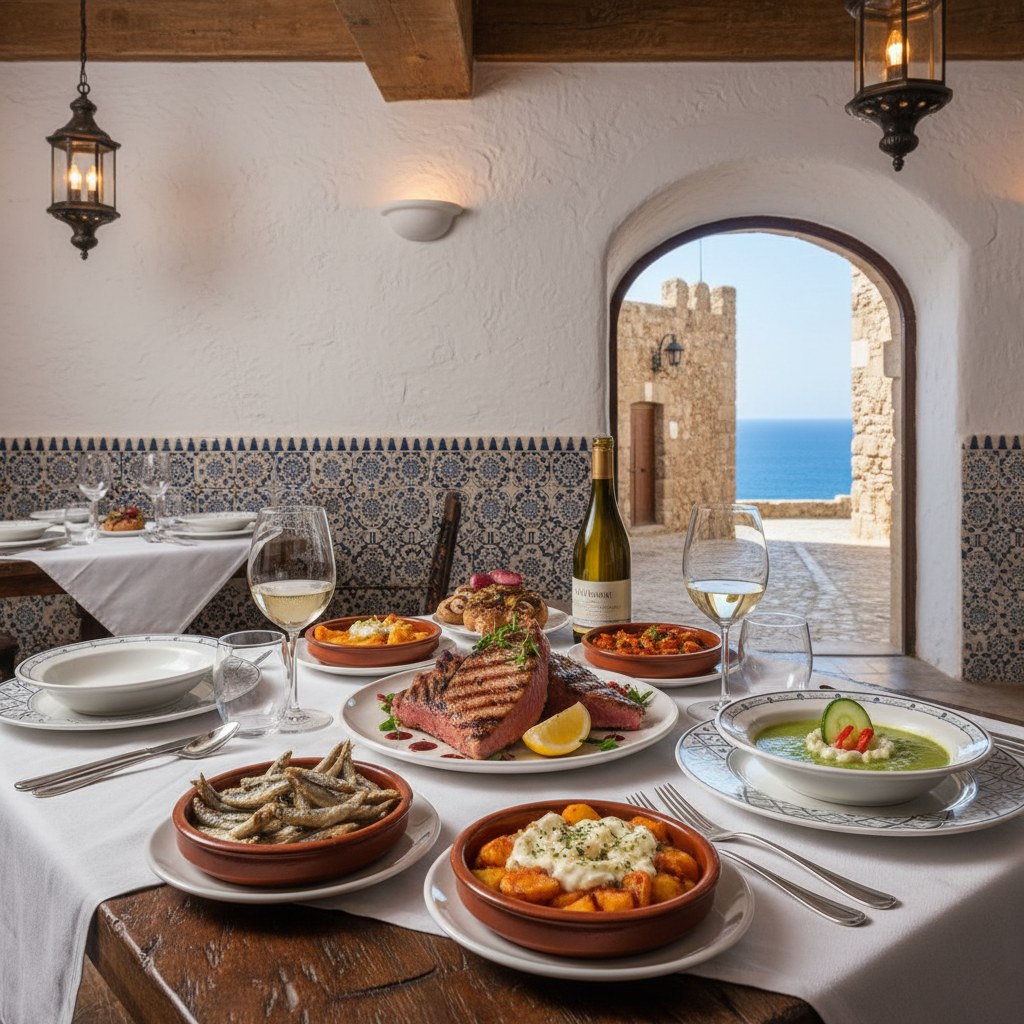
Tarifa’s culinary scene reflects its position between two seas and two continents. The town excels at fresh seafood—particularly tuna, which is landed daily at the port—and offers intriguing Moroccan influences in its spice-forward dishes and sweet pastries.
El Lola on Calle Guzmán el Bueno serves exceptional tapas in a rustic setting, with daily specials written on chalkboards. Their atún encebollado (tuna with caramelized onions) and grilled octopus are standouts. For a more upscale experience, Restaurante Morilla offers refined takes on traditional Andalusian cuisine with views over the strait.
Don’t miss the town’s heladerías (ice cream shops), which serve North African-inspired flavors like rose water, orange blossom, and pistachio alongside traditional Spanish options. Heladería Tarifa near the Puerta de Jerez is the local favorite.
Practical Information for Your Day Trip
The drive from Marbella to Tarifa takes approximately 90 minutes via the A-7 and A-48 motorways, covering roughly 100 kilometers. Traffic is generally light except during peak summer weekends. Fuel and rest stop facilities are available at regular intervals, with the best options in Estepona and Algeciras.
Parking in Tarifa’s Old Town is limited and often restricted to residents. Your best option is the large public car park near the port (Parking del Puerto), which charges approximately €1.50 per hour. From here, everything in town is within easy walking distance. If you’re planning extensive beach time at Valdevaqueros or Punta Paloma, note that beach parking can fill up by mid-morning in summer.
For those preferring not to drive, Comes operates regular bus service between Marbella and Tarifa, with journeys taking approximately two hours. Buses depart from Marbella’s main station several times daily, though schedules are reduced on Sundays and holidays.
The most convenient option for groups or those seeking flexibility is arranging private chauffeur service through a concierge. This allows you to customize your itinerary, make stops at viewpoints or nearby attractions, and avoid parking concerns entirely.
Why Arrange Your Tarifa Excursion Through Marbella Hospitality
Planning a seamless day trip requires local knowledge and logistical coordination—precisely what our concierge team specializes in. We arrange private chauffeur-driven transfers in luxury vehicles, pre-book tables at Tarifa’s best restaurants (many of which don’t accept walk-ins during peak season), and can organize specialized experiences like private kitesurfing instruction or exclusive whale-watching charters. Our team’s relationships with local operators ensure you access the highest-quality experiences without the uncertainty of last-minute bookings. Whether you’re traveling as a couple, family, or larger group, we tailor every detail to your preferences and schedule.
Plan Your Tarifa Adventure
A day trip to Tarifa from Marbella offers a refreshing counterpoint to the Costa del Sol’s luxury resort experience—a chance to encounter Andalusia’s wilder side, where medieval history, natural beauty, and adventure sports converge at the edge of Europe. Whether you’re drawn by the call of the wind, the allure of pristine beaches, or simply curiosity about this unique corner of Spain, Tarifa rewards visitors with authentic experiences and memorable landscapes.
Ready to explore beyond Marbella? Contact our concierge team to arrange your personalized Tarifa excursion, complete with private transportation, restaurant reservations, and expert local guidance. We’ll ensure your day trip becomes one of the highlights of your Costa del Sol stay.