
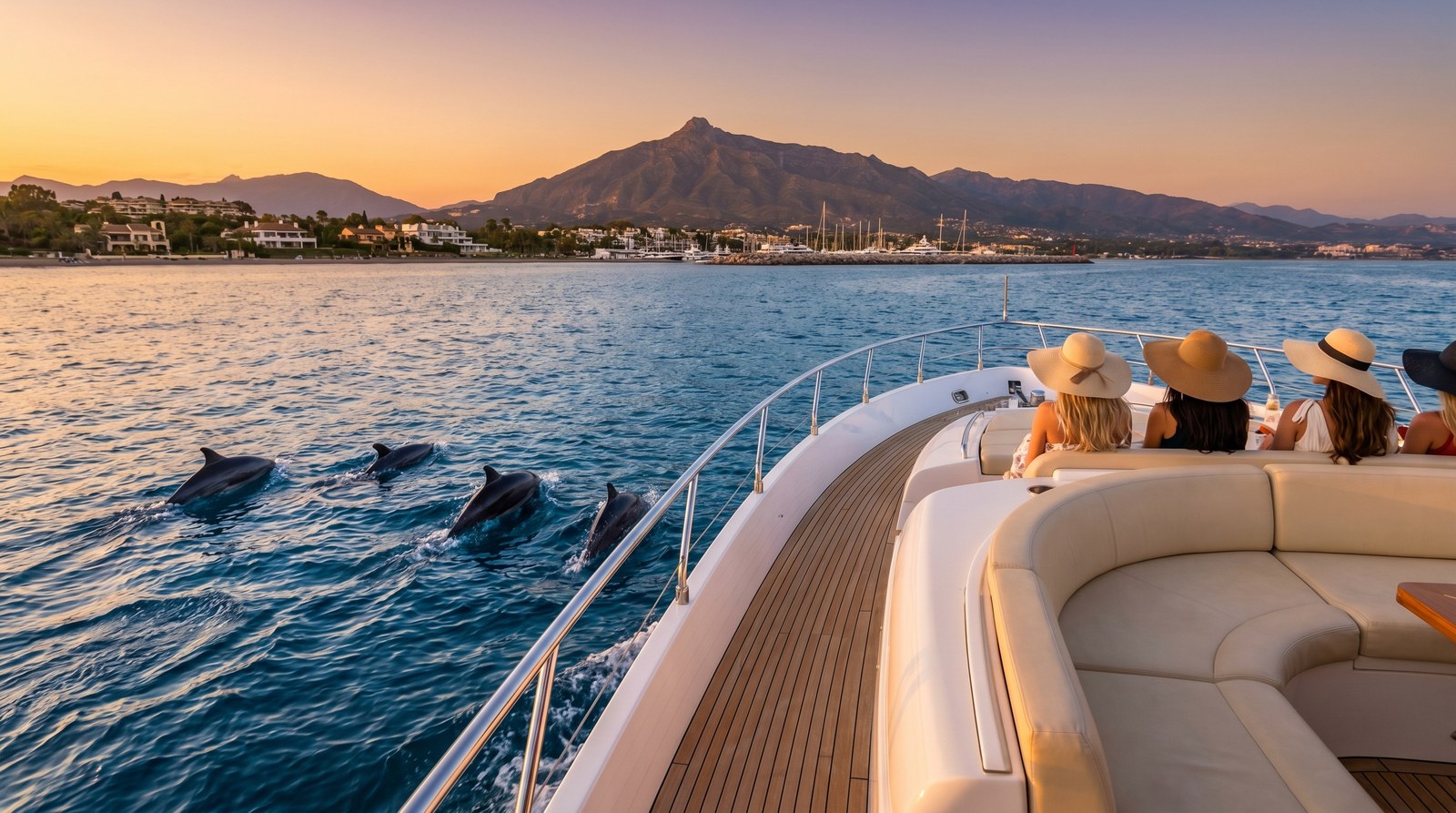
Few experiences rival the thrill of watching wild dolphins break the surface just metres from shore, their sleek forms arcing through the Mediterranean as beachgoers pause mid-conversation to witness the spectacle. Along Marbella’s eastern coastline, from Los Monteros to Cabopino, these encounters happen with surprising regularity—a gift of the Costa del Sol’s rich marine ecosystem and the resident pods of common and bottlenose dolphins that patrol these warm, nutrient-rich waters. This guide reveals exactly where to position yourself, when to look, and what to expect when dolphin spotting in Marbella.
Why Dolphins Love Marbella’s Eastern Coast

The stretch of coastline between Elviria and Cabopino offers ideal conditions for dolphin activity. The continental shelf drops away relatively close to shore here, creating upwellings that draw schools of sardines, anchovies, and mackerel—the primary diet of both common and bottlenose dolphins. Water temperatures remain moderate year-round, typically ranging from 15°C in winter to 24°C in summer, supporting abundant marine life.
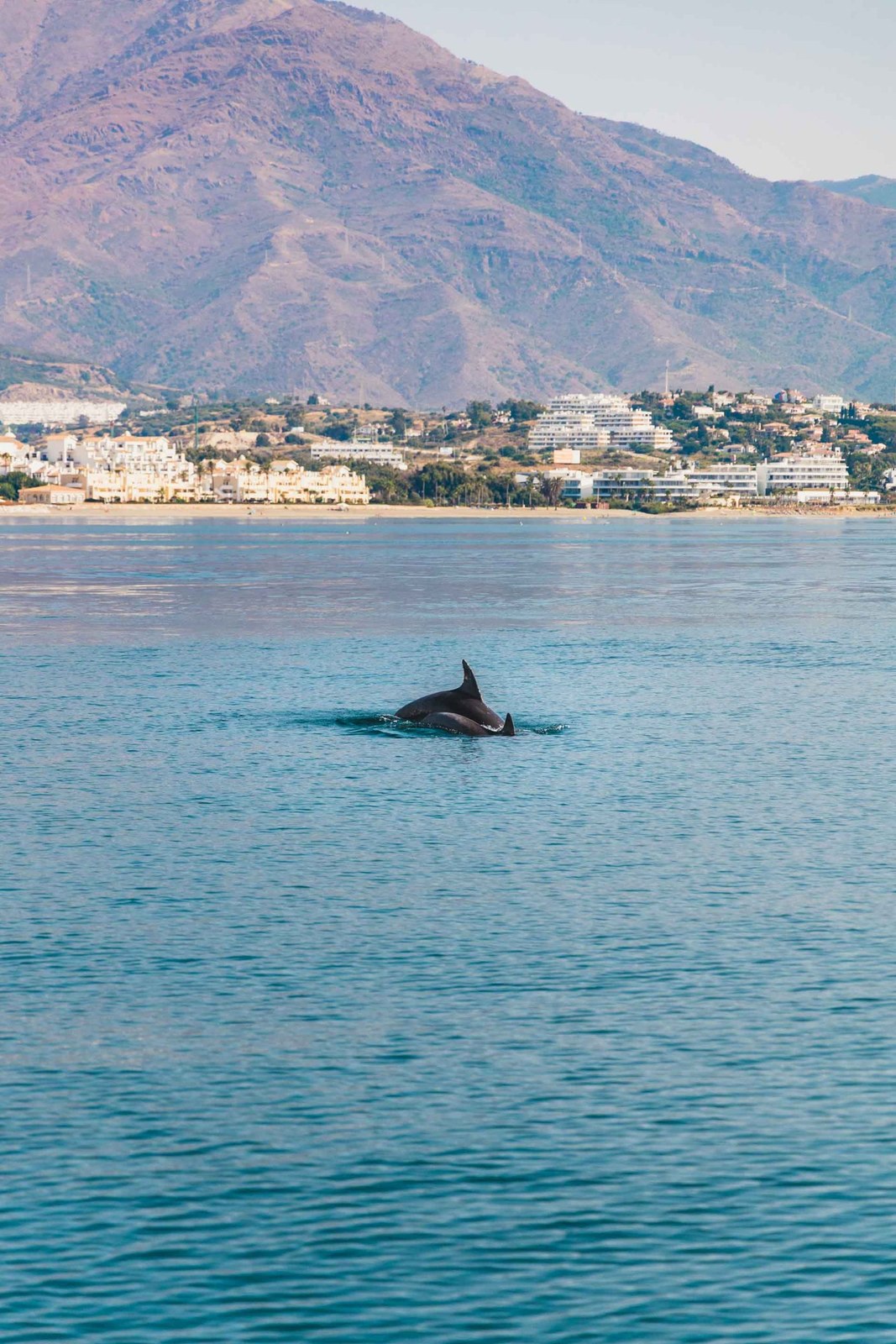
Unlike the more developed western beaches near Puerto Banús, this eastern corridor retains stretches of natural coastline with less boat traffic and clearer waters. Dolphins frequently venture within 50 to 100 metres of the beach, sometimes closer when pursuing fish schools into the shallows. Pods typically number between five and fifteen individuals, though larger aggregations of thirty or more occasionally appear during peak feeding times.
Insider tip: Dolphins often follow the same feeding routes along the coast. If you spot a pod moving eastward in the morning, position yourself further down the beach—they frequently circle back along the same corridor within an hour or two.
The Three Best Beaches for Dolphin Spotting
Cabopino Beach: The Dolphin Hotspot
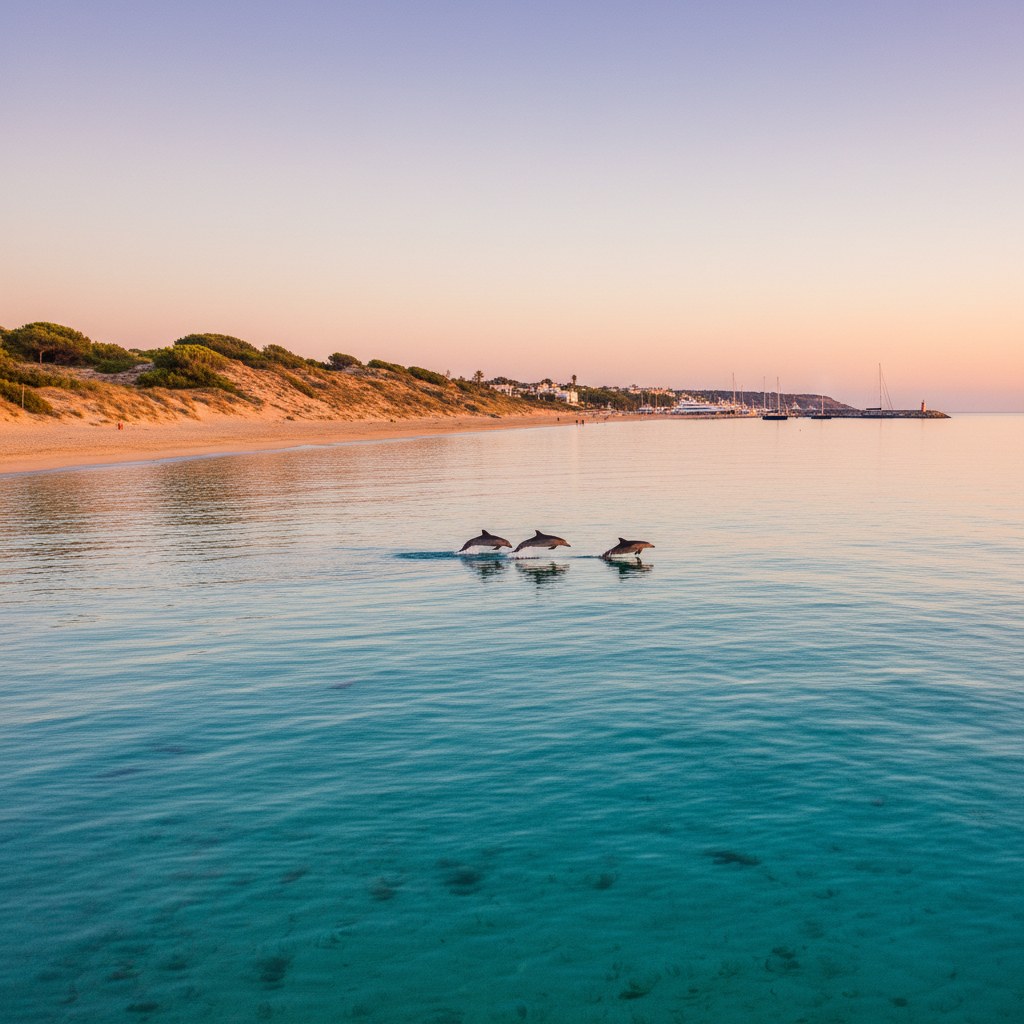
Playa de Cabopino consistently ranks as Marbella’s premier dolphin-watching location. This 1.2-kilometre stretch of golden sand sits just east of the Cabopino marina, where the coastline curves gently and the seabed topography creates natural fish aggregation points. The beach offers unobstructed sightlines in both directions, and the relatively calm waters make dolphin fins and backs clearly visible even at distance.
The area around the Artola dune system—Marbella’s protected natural monument at Cabopino’s eastern end—sees particularly frequent activity. Early morning walkers along this stretch report dolphin sightings on roughly two out of every three visits during peak season. The beach’s eastern orientation also means morning light works in your favour, reducing glare on the water surface.
Los Monteros Beach: Luxury Viewing with Refreshments
The Los Monteros coastline, stretching roughly two kilometres between the Los Monteros Hotel and Las Chapas, combines excellent dolphin-spotting opportunities with upscale beach club amenities. Pods regularly pass the stretch fronting Nosso Beach Club and the former La Cabane location, often between 9:00 and 11:00 in the morning.
What distinguishes Los Monteros is the ability to watch from comfort—order breakfast at one of the beachfront venues and keep your eyes on the water. Staff at these establishments have become accustomed to the rhythm of dolphin appearances and will often alert guests when a pod approaches. The beach shelves gradually here, and dolphins sometimes come remarkably close, within 30 metres, when chasing fish into the shallows.
Elviria Beach: The Quiet Alternative
Playa de Elviria, centred around the Elviria commercial centre and extending toward Las Chapas, offers a more tranquil dolphin-watching experience. This beach sees fewer visitors than Cabopino, particularly on weekday mornings, yet dolphins pass with comparable frequency. The waters here are notably calm thanks to the sheltered position, making surface activity easier to spot.
The stretch near the Don Carlos resort and the small rocky outcrops to the east create micro-habitats that attract baitfish. Dolphins patrol these areas methodically, often in a predictable east-to-west pattern during morning feeding. Local residents walking dogs at dawn report consistent sightings, particularly in the May to September window.
When to See Dolphins: Season and Time of Day
Best Months for Dolphin Activity
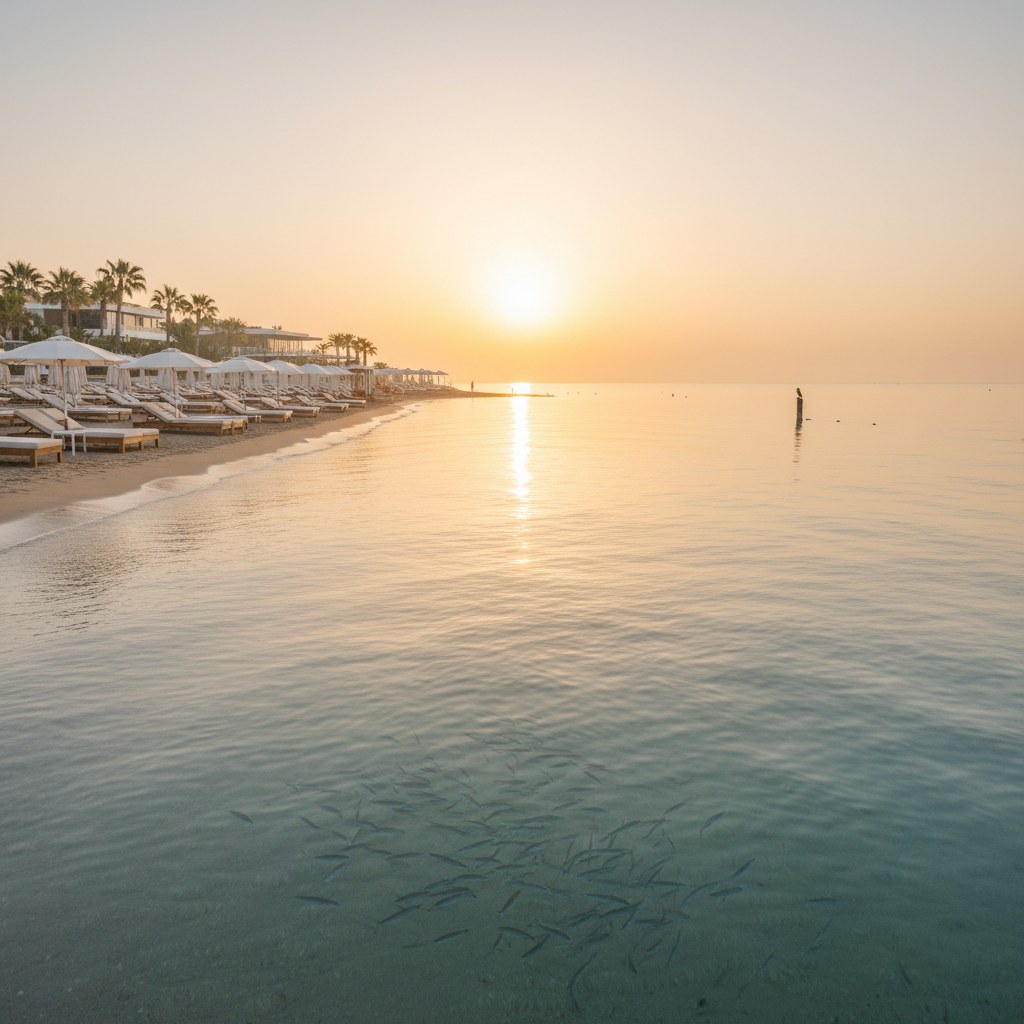
While dolphins inhabit Marbella’s waters year-round, sightings peak dramatically between May and October. Water temperatures during these months support larger populations of the small pelagic fish species dolphins feed on, and calmer seas make surface activity more visible. June through September represents the absolute prime window, with sighting probability exceeding 60% on any given early morning at Cabopino or Los Monteros.
Autumn months—particularly September and early October—can be exceptional. Waters remain warm, tourist numbers decline, and dolphins seem more relaxed, occasionally engaging in extended surface behaviour including breaching and tail-slapping. Winter sightings still occur but drop to perhaps one in four or five outings, and rougher seas can make observation challenging.
Optimal Times of Day
Dolphins follow feeding patterns tied to light and fish behaviour. The golden hours for spotting are:
- Early morning (7:00–10:00): Peak feeding time as dolphins hunt fish schools that have moved into shallower water overnight. Light conditions are ideal, with the sun behind you if watching from Marbella’s south-facing beaches.
- Late afternoon (17:00–20:00): A secondary feeding window as fish become active again. The low sun angle can create glare, but pods often linger longer during evening sessions, particularly in summer.
- Midday (12:00–15:00): Dolphins are typically resting or traveling during these hours. Sightings occur but are briefer and less predictable.
Tidal patterns matter less in the Mediterranean than in Atlantic waters, but slight tidal movements do influence fish behaviour. Local fishermen suggest the hour just after high tide often brings increased dolphin activity, though this effect is subtle.
What to Look For: Spotting Techniques
Successful dolphin spotting requires patience and knowing where to direct your attention. Don’t scan randomly—focus on the 100 to 300-metre zone offshore, where dolphins most frequently surface. Look for:
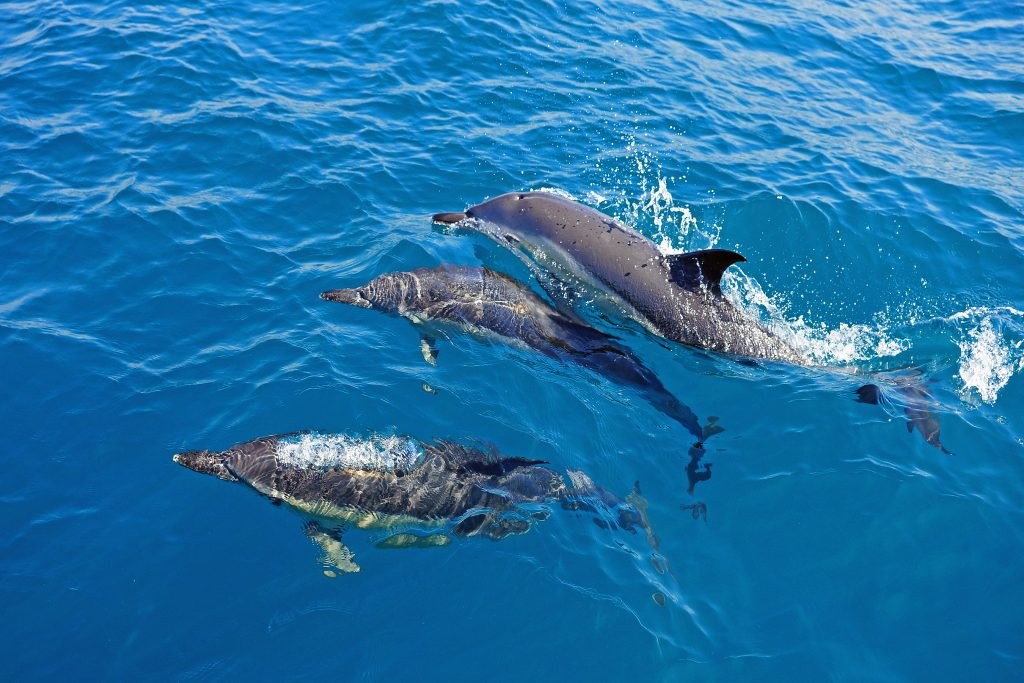
- Dorsal fins: The most obvious sign, appearing as dark curved shapes breaking the surface rhythmically.
- Splashes and disturbances: Feeding dolphins create visible surface commotion as they chase fish.
- Bird activity: Gulls diving repeatedly in one area often indicate a fish school—and dolphins aren’t far behind.
- Multiple surfaces: Dolphins surface to breathe every 20-30 seconds when traveling, creating a pattern you can track.
Bring polarized sunglasses to cut glare, and a basic pair of binoculars significantly improves your chances of early detection. Once you spot a pod, resist the urge to rush into the water—dolphins are curious but wary, and sudden movements or splashing will drive them further offshore.
Conservation note: Spanish regulations prohibit approaching dolphins closer than 60 metres by boat and discourage swimmers from pursuing them. Observe from shore or maintain respectful distance—these are wild animals, and harassment can disrupt critical feeding and social behaviours.
Combining Dolphin Watching with Marbella’s Beach Culture
One advantage of dolphin spotting in Marbella versus dedicated boat tours is the ability to blend wildlife observation with the region’s celebrated beach lifestyle. At Los Monteros, settle into a sunbed at a premium beach club, order fresh-pressed juice or a café con leche, and keep watch between conversations. Our guide to Marbella’s best beach clubs highlights venues along this dolphin-rich coastline.
For a more active approach, consider an early morning paddleboard or kayak session from Cabopino. Several rental operators near the marina open at 8:00, allowing you to position yourself offshore during peak dolphin hours. The elevated vantage point from a stand-up paddleboard offers superb sightlines, and the quiet propulsion won’t disturb marine life. Just remember the 60-metre rule if you encounter a pod.
Families staying in luxury villas along the eastern coast—particularly in Elviria, Los Monteros, or Cabopino—can make dolphin spotting a morning ritual. A short walk to the beach at dawn, binoculars in hand, often yields sightings that delight children and adults equally. It transforms a standard beach holiday into something more connected to the Mediterranean’s wild character.
Beyond Shore Watching: Yacht-Based Dolphin Encounters
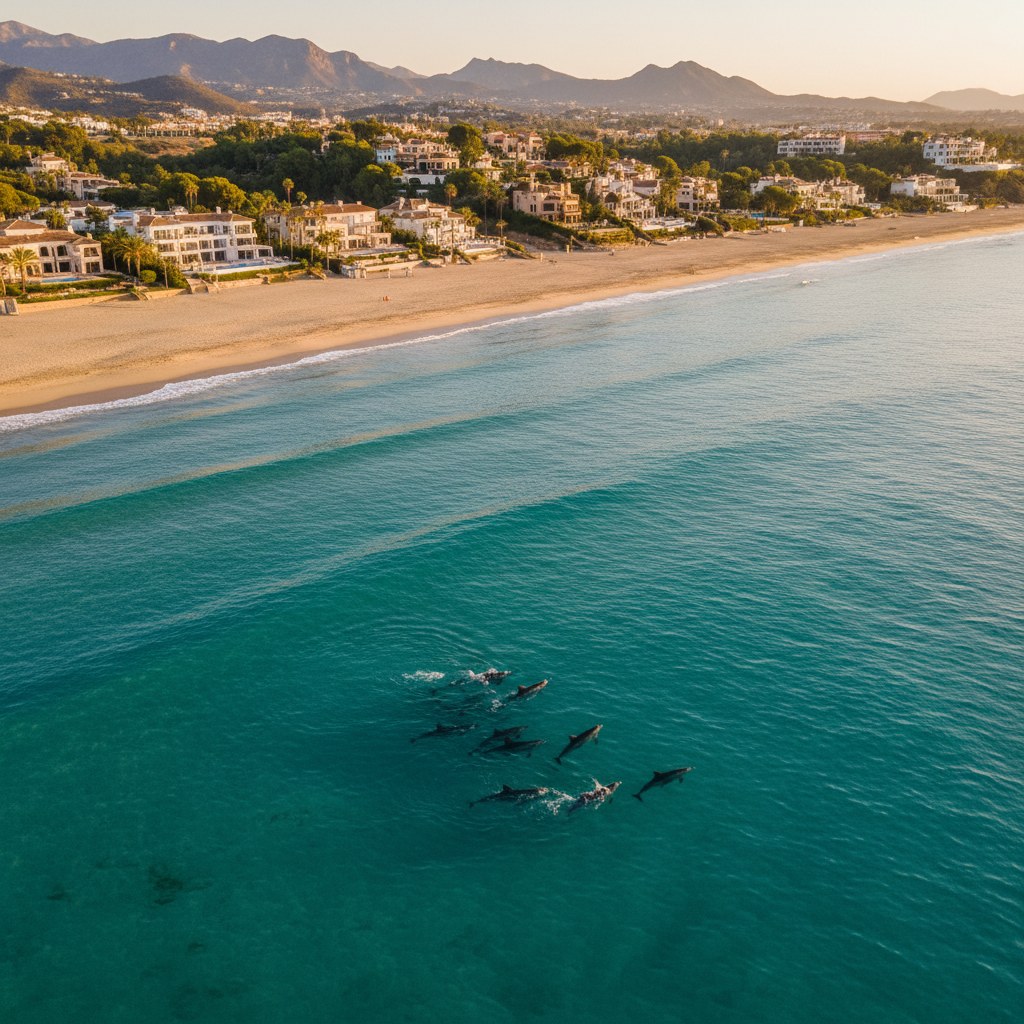
For a more immersive experience, a private yacht charter offers the opportunity to observe dolphins in deeper waters where pods are larger and behaviour more varied. Morning departures from Puerto Banús or Cabopino marina can position you along the coastal corridor where dolphins commute between feeding areas, often within 30 minutes of leaving port.
Responsible charter operators maintain the required distance but can track pods for extended periods, allowing you to witness hunting strategies, social interactions, and occasionally spectacular aerial displays. The experience differs fundamentally from shore observation—you’re in the dolphins’ environment rather than watching from the margin. Our yacht charter service can arrange dolphin-focused excursions with experienced captains who know the local marine life patterns intimately.
Spring and early summer offer the additional possibility of encountering pilot whales and even orcas in the waters between Marbella and the Strait of Gibraltar, though these sightings remain relatively rare. The Alboran Sea ecosystem supports remarkable biodiversity for a Mediterranean location, thanks to Atlantic influence through the strait.
Practical Tips for Successful Dolphin Spotting
Maximize your chances with these field-tested recommendations:
- Visit multiple times: Even during peak season, sightings aren’t guaranteed on any single outing. Plan three or four early morning beach visits during your stay.
- Choose weekday mornings: Fewer people means quieter beaches, and dolphins seem more comfortable approaching shore when human activity is minimal.
- Check sea conditions: Calm seas (wave height under 0.5 metres) dramatically improve visibility. Avoid days with strong easterly winds that roughen the surface.
- Bring a camera with zoom: Smartphone cameras struggle with distance. A basic telephoto lens (200mm+) captures the magic for later.
- Be patient and quiet: Loud conversations and music can be detected underwater. Maintain a peaceful atmosphere.
- Respect private property: Some of the best vantage points front private beach clubs. Consider booking a sunbed or ordering refreshments rather than trespassing.
Local knowledge helps enormously. Chat with beach club staff, fishermen preparing boats at dawn, or long-term residents walking the shoreline—they often share recent sighting patterns and favourite observation spots. The Marbesa area just east of Cabopino also merits exploration for those willing to venture slightly further from central Marbella.
Why Marbella Hospitality Enhances Your Dolphin-Spotting Experience
Our concierge team brings insider knowledge that transforms a hopeful beach walk into a well-orchestrated wildlife experience. We monitor recent dolphin activity through our network of beach club partners and yacht captains, advising guests on the most promising locations and times based on current conditions rather than generic advice. Whether you’re seeking a villa rental positioned for easy early-morning beach access, arranging a private yacht charter with a captain experienced in marine wildlife observation, or simply want recommendations for the best beachfront breakfast spot to watch from, our team ensures every detail supports your goals. We specialize in crafting authentic Marbella experiences that go beyond the standard tourist itinerary.
Make Dolphin Spotting Part of Your Marbella Story
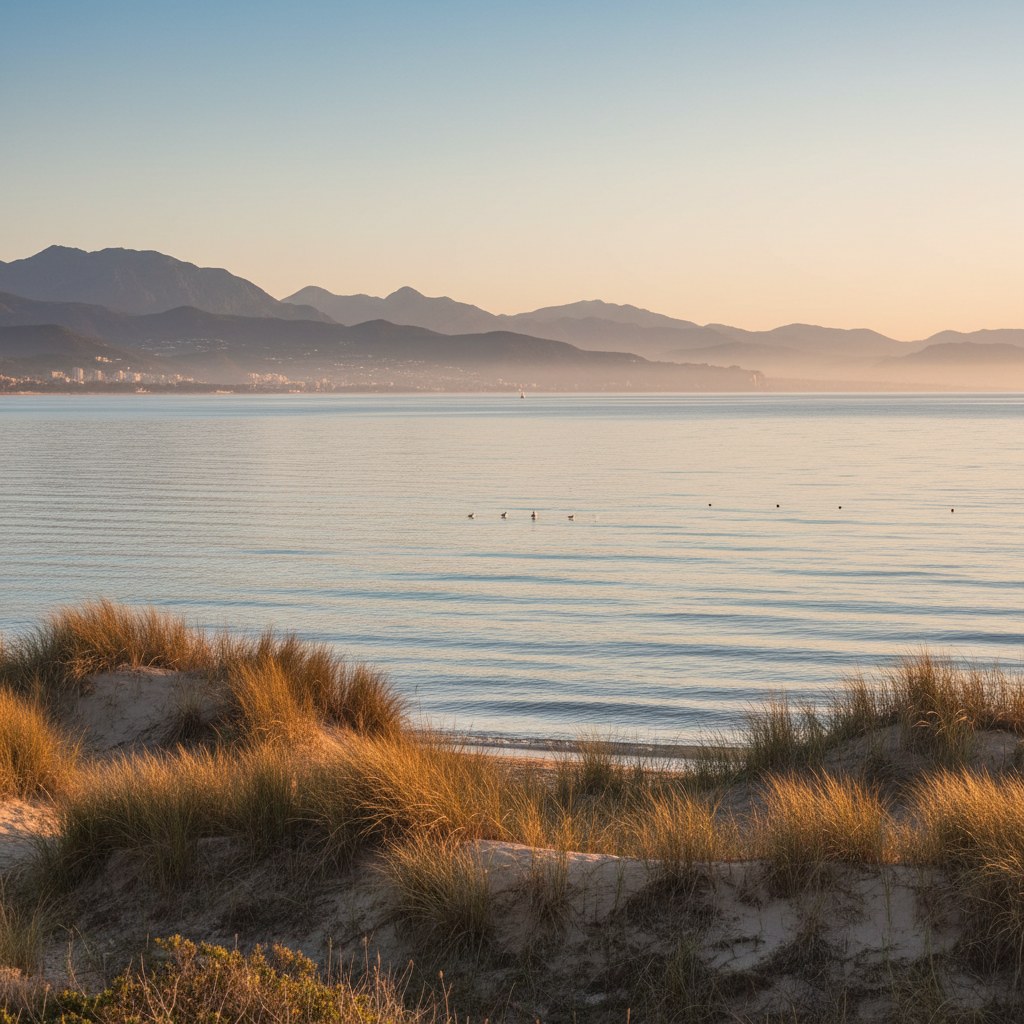
Watching wild dolphins in their natural habitat adds a dimension to a Marbella holiday that no beach club, restaurant, or villa—however luxurious—can replicate alone. It’s a reminder that beneath the Costa del Sol’s polished surface lies a genuine Mediterranean ecosystem, one where ancient rhythms of predator and prey continue as they have for millennia. Whether you witness a brief appearance of three or four individuals or find yourself mesmerized by a pod of twenty hunting cooperatively just offshore, the encounter will likely rank among your most vivid Marbella memories.
The eastern beaches—Cabopino, Los Monteros, and Elviria—await, their waters holding the promise of that magical moment when a dorsal fin breaks the surface and you realize you’re sharing the Mediterranean with one of its most intelligent inhabitants. For assistance planning your dolphin-spotting adventure, arranging accommodation along the prime coastline, or organizing a private yacht excursion, contact our concierge team—we’ll ensure you’re in the right place at the right time.