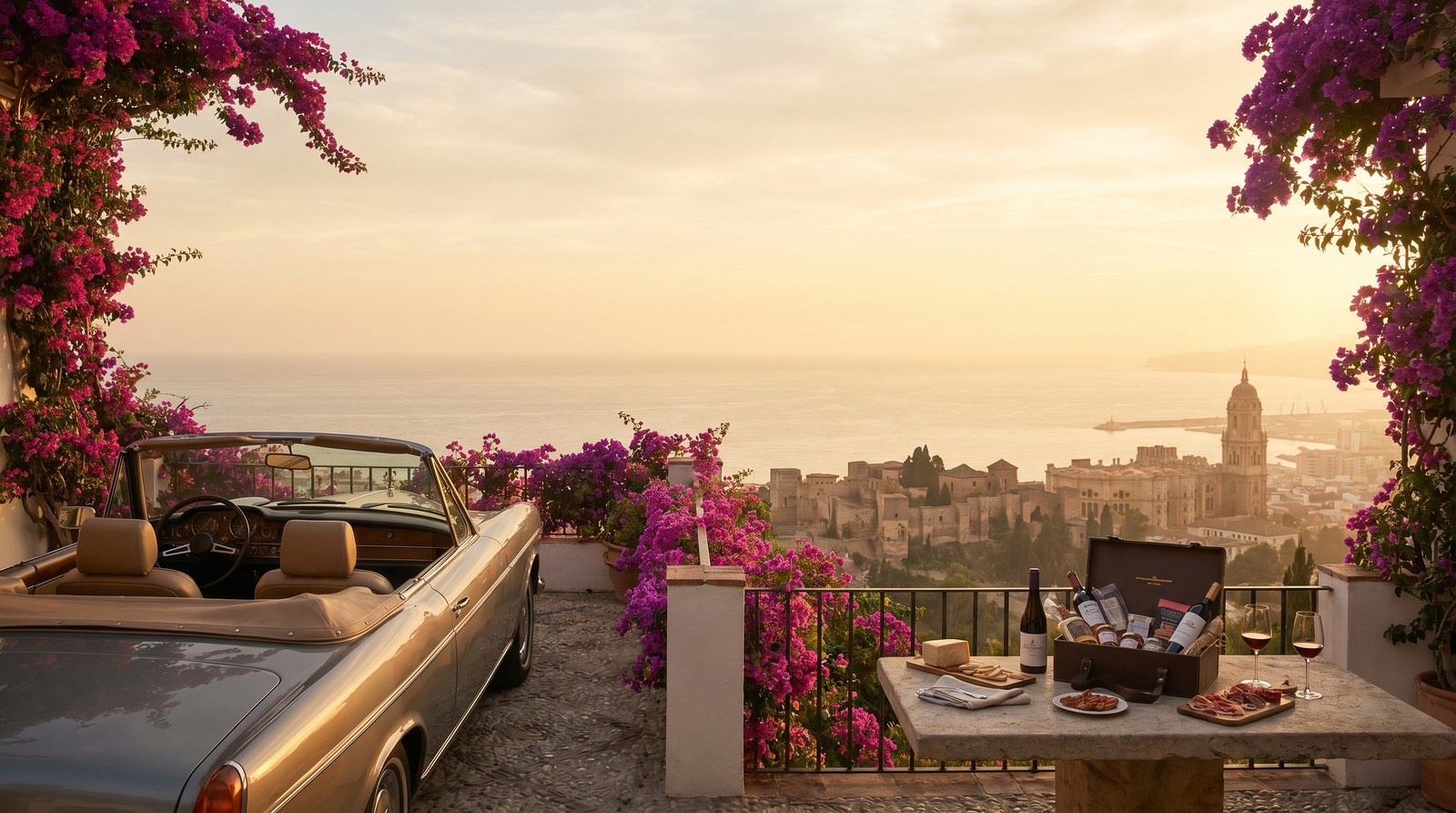
Just 60 kilometres east of Marbella, Málaga offers a compelling contrast to the polished resort lifestyle of the Costa del Sol. Spain’s sixth-largest city and the birthplace of Picasso, Málaga blends 3,000 years of history with contemporary Andalusian energy, world-class museums, and a thriving culinary scene that ranges from century-old tapas bars to Michelin-starred innovation. Whether you’re seeking ancient Moorish fortresses, Roman ruins, or simply an authentic Spanish city experience, a Málaga day trip from Marbella delivers cultural depth that complements your luxury coastal stay.
Why Málaga Deserves a Day of Your Marbella Holiday
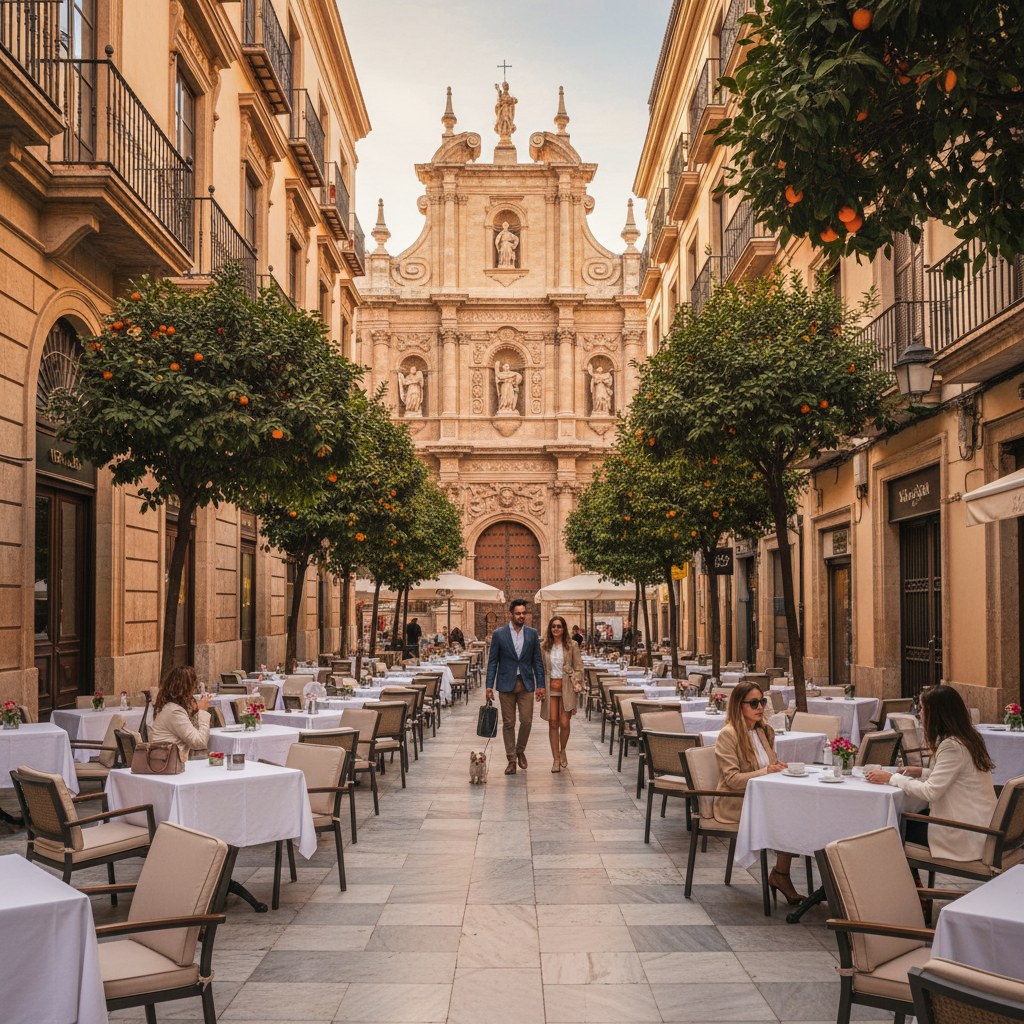
While Marbella excels at beachfront luxury and yacht-lined marinas, Málaga provides something equally valuable: authentic Andalusian urbanism. The city’s compact historic centre can be explored on foot, revealing layers of Phoenician, Roman, Moorish, and Renaissance heritage within a few square kilometres.
Málaga enjoys over 300 days of sunshine annually, making it Europe’s sunniest major city. The Mediterranean climate means mild winters—January averages 17°C—and hot summers that can reach 35°C in July and August. Spring (March to May) and autumn (September to November) offer the most comfortable conditions for sightseeing, with temperatures in the low-to-mid 20s and fewer crowds than peak summer.
The city’s recent cultural renaissance has transformed it into one of southern Spain’s most dynamic destinations. More than 30 museums now dot the city centre, including satellite branches of Paris’s Centre Pompidou and St. Petersburg’s Russian Museum, alongside the exceptional Museo Picasso Málaga housed in a restored 16th-century palace.
Insider tip: Avoid visiting Málaga in July and August when temperatures regularly exceed 33°C and the city fills with domestic tourists. The Christmas season, particularly early December, offers spectacular street illuminations and comfortable 18°C days—ideal for exploring on foot.
The Journey from Marbella to Málaga
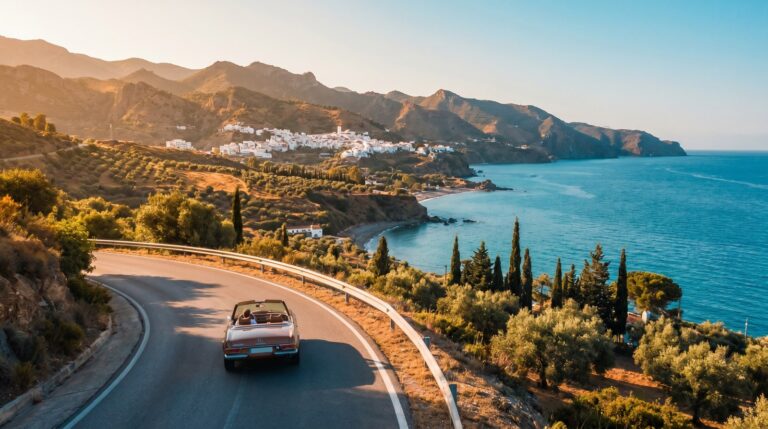
The 60-kilometre drive along the AP-7 motorway takes approximately 45 minutes in light traffic, though allow up to 75 minutes during morning rush hour (8:00-9:30) or Friday afternoons. The toll-free A-7 coastal road offers sea views but adds 15-20 minutes to your journey. Parking in central Málaga can be challenging; the Parking Alcazaba (Calle Guillén Sotelo) and Parking Plaza de la Marina offer convenient access to the historic quarter.
Alternatively, the Renfe Cercanías C-1 train connects Marbella to Málaga María Zambrano station in approximately 45 minutes, with departures every 30-60 minutes throughout the day. The train offers stress-free travel and drops you within a 15-minute walk of the city centre. For a seamless experience, Marbella Hospitality’s chauffeur service provides door-to-door luxury transport, allowing you to maximise your time in the city without navigation or parking concerns.
Málaga’s Essential Historical Landmarks
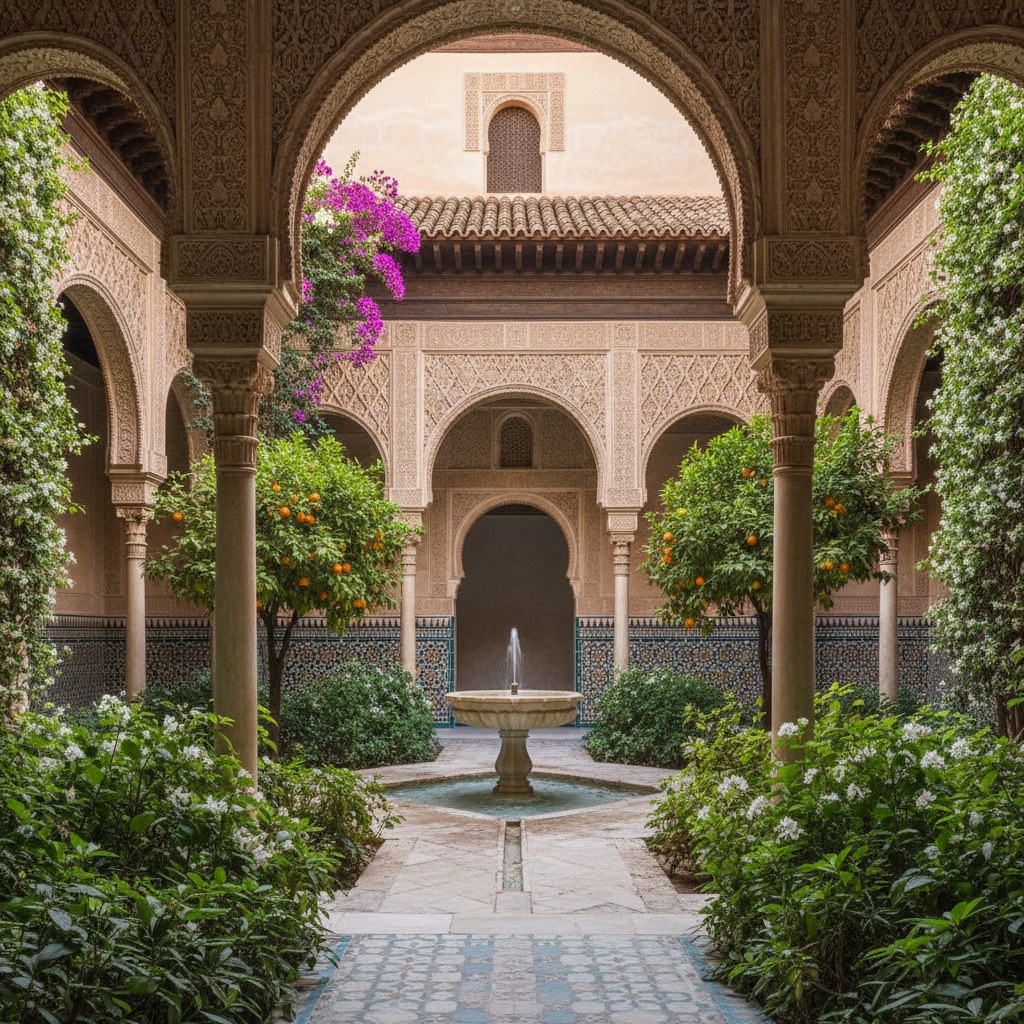
La Alcazaba: The Moorish Palace-Fortress
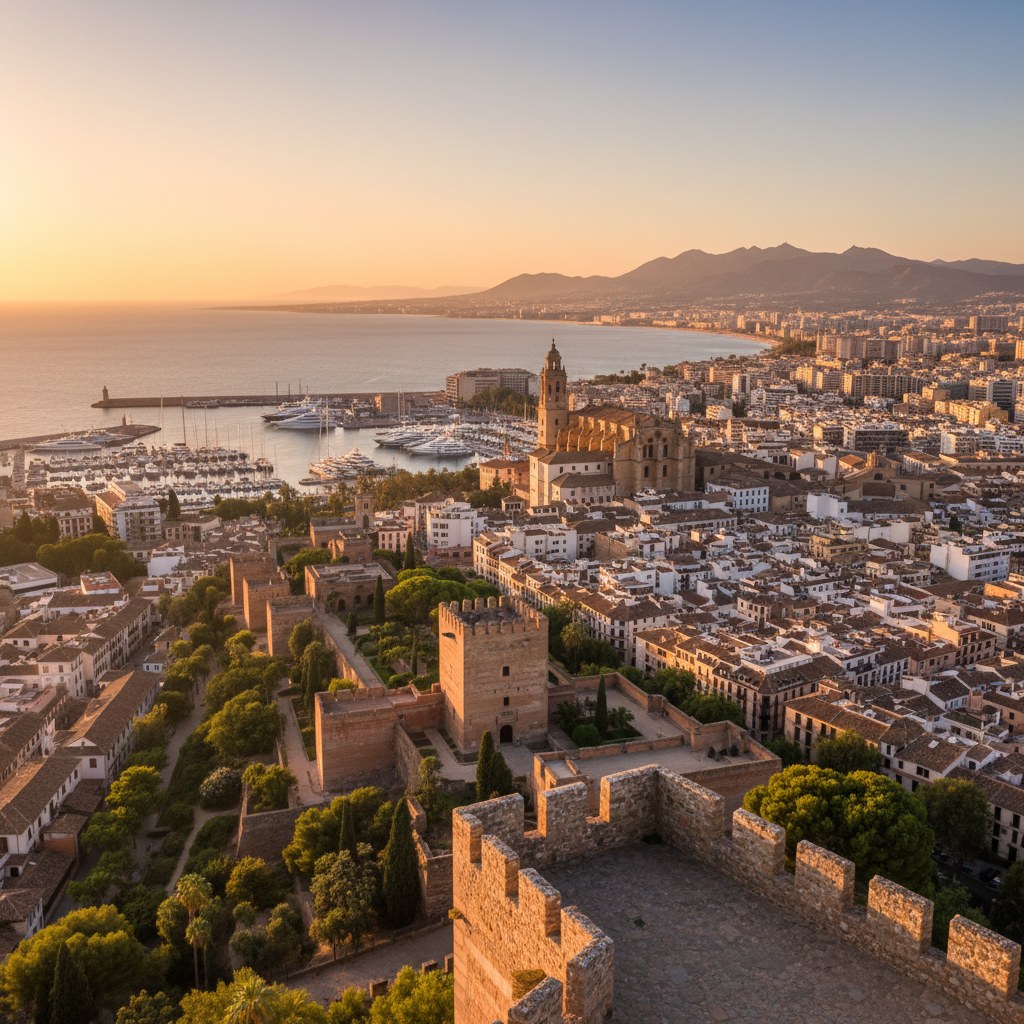
La Alcazaba ranks among Spain’s best-preserved Moorish fortifications, a palatial citadel constructed in the 11th century atop Roman foundations. The name derives from the Arabic al-qasbah, meaning “the citadel,” and the complex served as both royal residence and military stronghold for Málaga’s Moorish governors.
The fortress comprises two defensive circuits connected by a zigzagging ramp designed to slow attackers. The lower walls incorporate Roman columns and capitals recycled from the adjacent theatre, while the upper palace features serene courtyards with horseshoe arches, decorative tilework, and fountains fed by an ingenious 11th-century water system still partially functional today.
The palace courtyards—Patio de los Surtidores (Court of the Fountains) and Patio de los Naranjos (Orange Tree Court)—offer fragrant gardens planted with citrus, jasmine, and bougainvillea. The upper ramparts provide sweeping views across Málaga’s port, the bullring, and the Mediterranean beyond.
- Location: Calle Alcazabilla, 2, at the base of Mount Gibralfaro
- Hours: Tuesday-Sunday 9:00-20:00 (summer), 9:00-18:00 (winter); closed Mondays
- Admission: €3.50 general; €5.50 combined ticket with Castillo de Gibralfaro
- Visit duration: 60-90 minutes for thorough exploration
Castillo de Gibralfaro: The Hilltop Sentinel
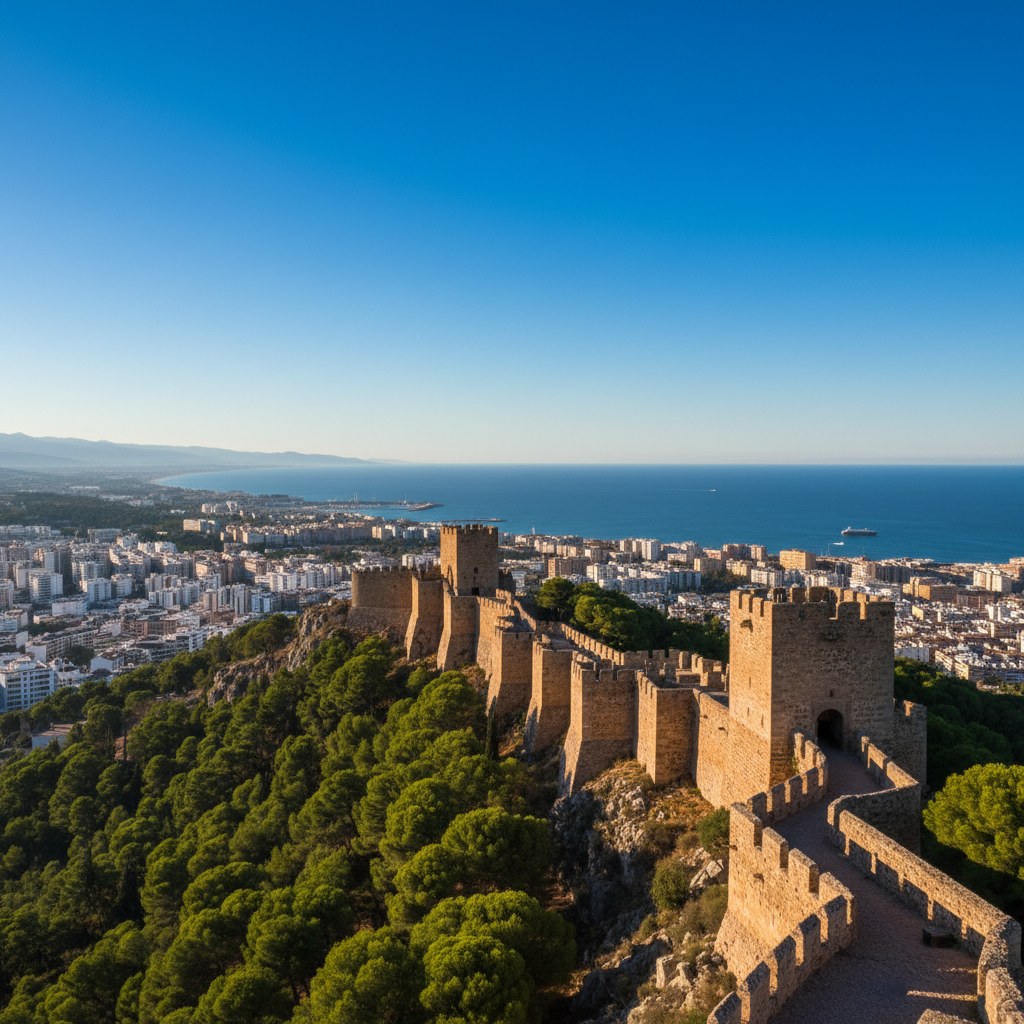
Perched 130 metres above the city, Castillo de Gibralfaro was constructed in the 14th century by Yusuf I of Granada to protect La Alcazaba below. The name combines the Arabic Jabal (mountain) with the Greek pharos (lighthouse), referencing the Phoenician beacon that once crowned this strategic height.
The castle played a pivotal role in 1487 when Catholic monarchs Ferdinand and Isabella laid a three-month siege that ended Moorish rule in Málaga. The defenders held out until starvation forced surrender, marking one of the final chapters in the Reconquista.
Today, visitors can walk the rampart circuit—approximately 1.3 kilometres of battlements connecting eight defensive towers. The views encompass the entire city, the port, the bullring, and on clear days, the Rif Mountains of North Africa across the Strait. A small interpretation centre details the castle’s military history and the 1487 siege.
The walk from La Alcazaba to Gibralfaro takes 15-20 minutes uphill through pine-shaded paths. Alternatively, bus line 35 runs from the city centre to the castle entrance.
Teatro Romano: Málaga’s Oldest Monument
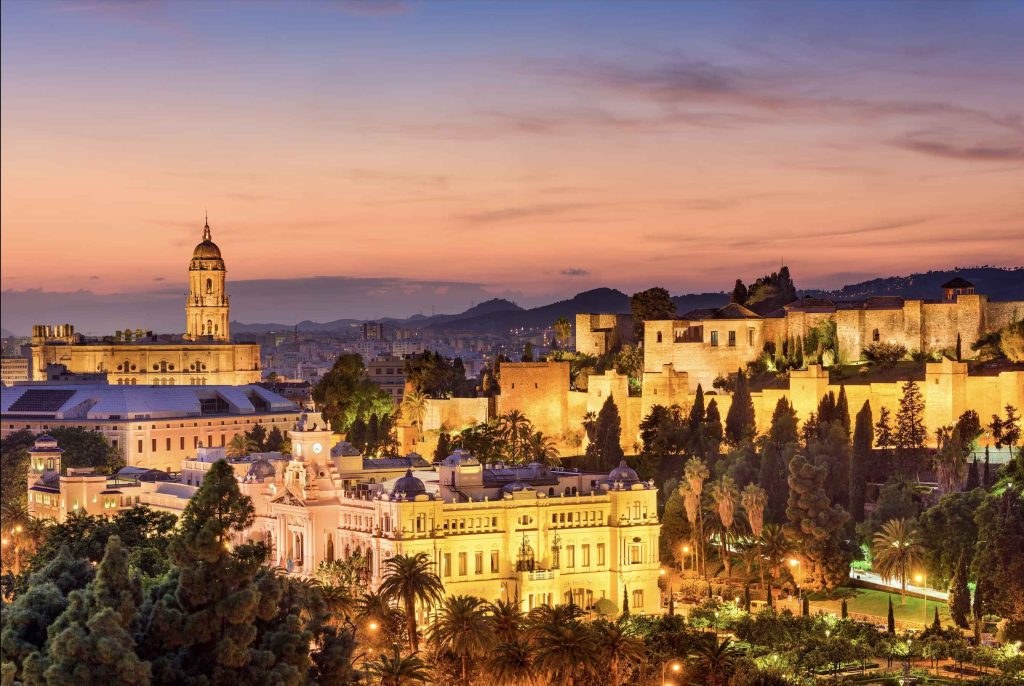
Built during the reign of Emperor Augustus in the 1st century BC, the Teatro Romano remained in use for approximately 300 years before falling into disuse. The Moors subsequently quarried its stone to construct La Alcazaba, and the theatre lay buried and forgotten until accidental rediscovery in 1951 during post-war construction work.
Excavation and restoration have revealed the cavea (semicircular seating area), parts of the orchestra (performance space), and remnants of the scaenae frons (stage backdrop). The theatre originally seated approximately 1,200 spectators across its 16-metre-high tiers. Free admission allows visitors to walk among the restored marble seats and columns, with informative panels explaining Roman theatrical traditions.
The adjacent Centro de Interpretación houses archaeological finds from the excavation and multimedia presentations on Roman Málaga. The theatre occasionally hosts contemporary performances, creating an evocative link between ancient and modern culture.
Catedral de Málaga: The One-Armed Lady
Construction of Málaga Cathedral began in 1528 on the site of the city’s main mosque, following the Christian conquest. The project consumed 254 years, resulting in a fascinating architectural hybrid blending Renaissance, Baroque, and Neoclassical elements.
The cathedral’s distinctive asymmetry earned it the affectionate nickname La Manquita (the one-armed lady)—the south tower rises to 84 metres, but the north tower was never completed. Local legend claims the funds were redirected to support the American Revolution, though historians suggest more prosaic budget shortfalls.
The interior features a soaring nave with massive stone columns, an intricately carved baroque choir with 42 cedar wood stalls depicting saints, and two 18th-century organs still used for concerts. The rooftop tour (booked separately) takes visitors up the south tower for panoramic city views and close inspection of the flying buttresses and stone gargoyles.
- Location: Calle Molina Lario, in the heart of the historic centre
- Hours: Monday-Friday 10:00-18:00, Saturday 10:00-17:00; closed Sunday mornings
- Admission: €10 general; rooftop tours €15 (advance booking recommended)
Museums and Cultural Attractions
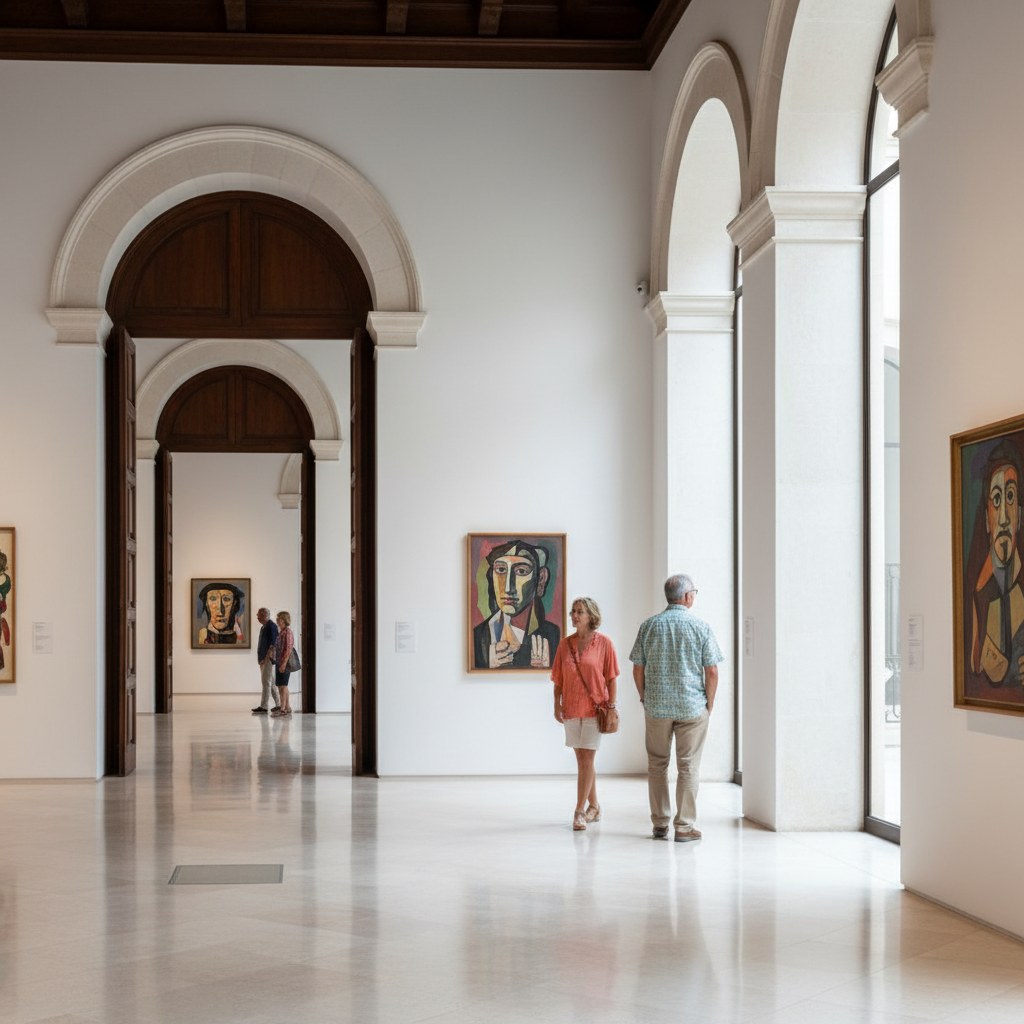
Museo Picasso Málaga
Pablo Picasso was born in Málaga in 1881, and the city now houses one of the world’s most significant collections of his work. The Museo Picasso Málaga occupies the restored Palacio de Buenavista, a 16th-century Renaissance palace in the historic quarter, and displays more than 230 works spanning Picasso’s entire career.
The permanent collection includes paintings, sculptures, ceramics, and works on paper donated by Christine and Bernard Ruiz-Picasso (the artist’s daughter-in-law and grandson). Temporary exhibitions explore specific periods or themes in Picasso’s oeuvre and his dialogue with other modern masters.
Archaeological excavations beneath the palace uncovered Phoenician, Roman, and Moorish remains, now incorporated into the museum’s basement galleries—a compelling visual timeline of Málaga’s layered history.
Museo de Málaga
Housed in the Palacio de la Aduana, an 18th-century customs house near the port, the Museo de Málaga combines the city’s archaeological and fine arts collections under one roof. The archaeology galleries trace Málaga’s history from Phoenician settlement through Roman and Moorish periods, featuring exceptional mosaics, sculpture, and ceramics.
The fine arts section showcases Spanish painting from the 15th to 20th centuries, with particular strength in 19th-century Andalusian artists. Works by Murillo, Zurbarán, and Málaga-born painters such as José Moreno Carbonero provide context for the region’s artistic traditions.
Jardín Botánico-Histórico La Concepción
Located 5 kilometres north of the city centre, La Concepción ranks among Europe’s finest tropical and subtropical gardens. The estate was created in 1855 by Amalia Heredia Livermore and Jorge Loring Oyarzábal, members of Málaga’s 19th-century industrial aristocracy who travelled extensively and imported exotic plants from across the globe.
The 3.5-hectare Historic Garden features more than 3,000 species arranged in romantic English landscape style, with winding paths, streams, waterfalls, and ornamental pavilions. Highlights include a spectacular bamboo forest, a palm grove with rare species from the Canary Islands and South America, and a collection of century-old ficus trees with massive aerial roots.
The surrounding 50-hectare arboretum contains additional collections organised geographically—Australian eucalyptus, Asian magnolias, American palms. The garden is particularly beautiful in spring when wisteria, jacaranda, and bougainvillea bloom profusely.
Reaching La Concepción requires a car or taxi (15 minutes from the centre), but the serene beauty and cooler microclimate make it worthwhile, especially on hot summer days.
Málaga’s Culinary Scene: From Market Stalls to Michelin Stars
Málaga’s food culture reflects its position as a working port city rather than a resort destination—authentic, unpretentious, and deeply rooted in Andalusian tradition. The city is famous for pescaíto frito (fried fish), typically small fish such as anchovies, red mullet, and squid dusted in wheat flour and fried in abundant olive oil until crispy.
Mercado Central de Atarazanas
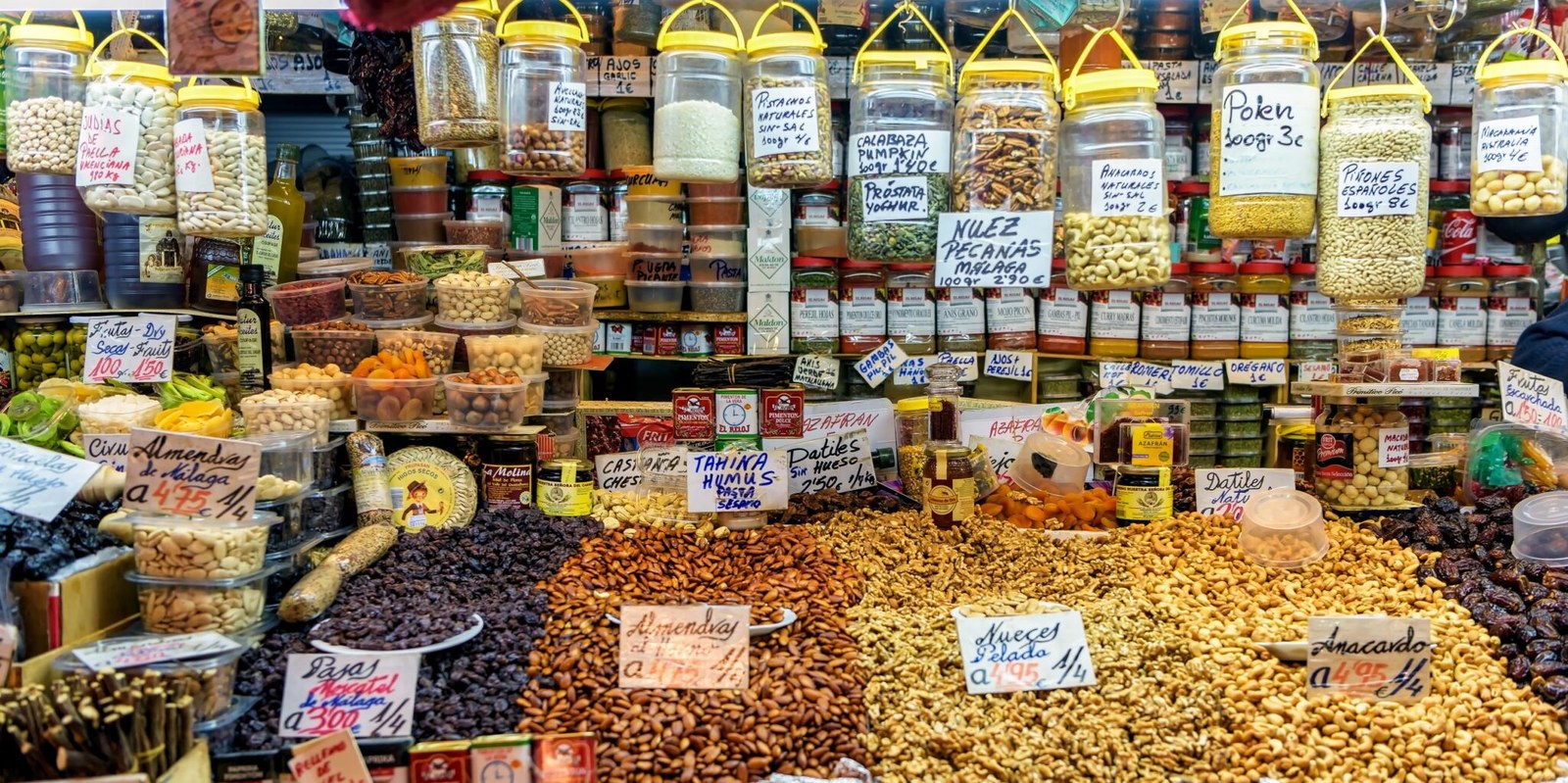
The Mercado de Atarazanas occupies a 14th-century Moorish shipyard—atarazanas means “shipyard” in Arabic—converted into a spectacular iron-and-glass market hall in 1879. The original Moorish horseshoe-arch gateway still stands at the entrance, a remarkable juxtaposition with the Victorian market structure.
Inside, more than 60 stalls sell pristine seafood landed that morning at Málaga’s fish auction, seasonal produce from the surrounding huertas (market gardens), Iberian ham, local cheeses, and olives. Several bars within the market serve tapas and wine—order the day’s catch simply grilled with garlic and parsley, accompanied by a glass of chilled vino de Málaga, the city’s traditional sweet wine.
The market operates Monday-Saturday 8:00-15:00. Arrive before 11:00 for the best selection and most vibrant atmosphere.
Traditional Tapas in the Historic Centre
Málaga’s tapas scene centres on several key streets in the old quarter. Calle Strachan, Calle Granada, and the area around Plaza de la Merced (Picasso’s birthplace) host dozens of traditional bars where locals gather for pre-lunch or evening tapas.
Essential dishes include ensaladilla malagueña (potato salad with salt cod and orange), porra antequerana (a thicker cousin of gazpacho), espetos de sardinas (sardines grilled on bamboo skewers over driftwood fires), and berenjenas con miel (fried aubergine drizzled with local cane honey). Pair these with Málaga Virgen, a crisp white wine from the Montes de Málaga, or sweet Moscatel as a digestif.
Local knowledge: Málaga observes the tradition of la porra—many bars still offer a small free tapa with each drink ordered. The quality varies, but this custom makes bar-hopping economical and allows you to sample widely across multiple establishments.
Contemporary Dining and Michelin Recognition
Málaga’s culinary evolution has attracted Michelin attention in recent years. José Carlos García, housed in a glass pavilion on the Muelle Uno waterfront, holds one Michelin star for its creative Andalusian cuisine with Asian influences. The tasting menus showcase impeccable local ingredients—red prawns from Málaga’s coast, mountain lamb, Sierra de las Nieves mushrooms—executed with contemporary precision.
For a comprehensive guide to fine dining across the Costa del Sol, including Marbella’s own Michelin-starred establishments, consult our Michelin-star dining guide and our broader best restaurants in Marbella article.
Seasonal Events Worth Planning Around
Semana Santa: Holy Week Processions
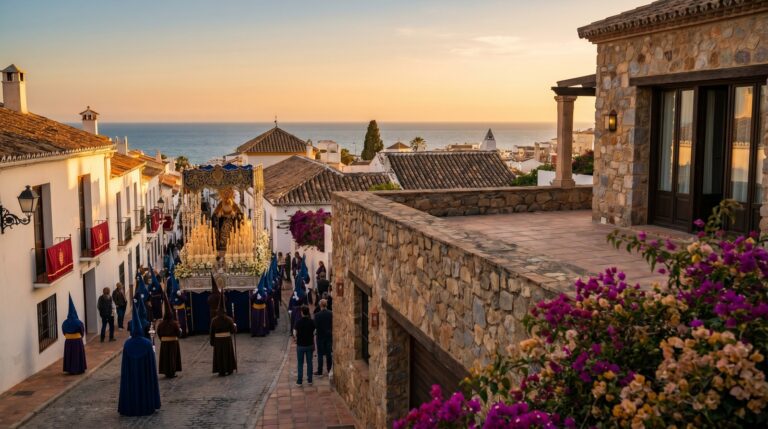
Málaga’s Semana Santa celebrations rank among Spain’s most spectacular, drawing hundreds of thousands of spectators each March or April. Throughout Holy Week, 42 religious brotherhoods process through the city streets carrying enormous tronos—ornate platforms bearing life-size religious sculptures weighing up to 5,000 kilograms.
Each trono is carried by 150-250 costaleros (bearers) who train year-round for this physically demanding honour. The processions follow prescribed routes through the historic centre, often lasting 8-12 hours from departure to return. The atmosphere combines solemn devotion with festive energy—drums and brass bands accompany the tronos, while spectators applaud exceptional displays of bearing skill.
The most dramatic moments occur during the madrugá (dawn procession) from Holy Thursday night into Good Friday morning, when several brotherhoods converge in the narrow streets around the cathedral. For insights into experiencing Holy Week on the Costa del Sol, see our guide to Semana Santa in Marbella.
Christmas Illuminations
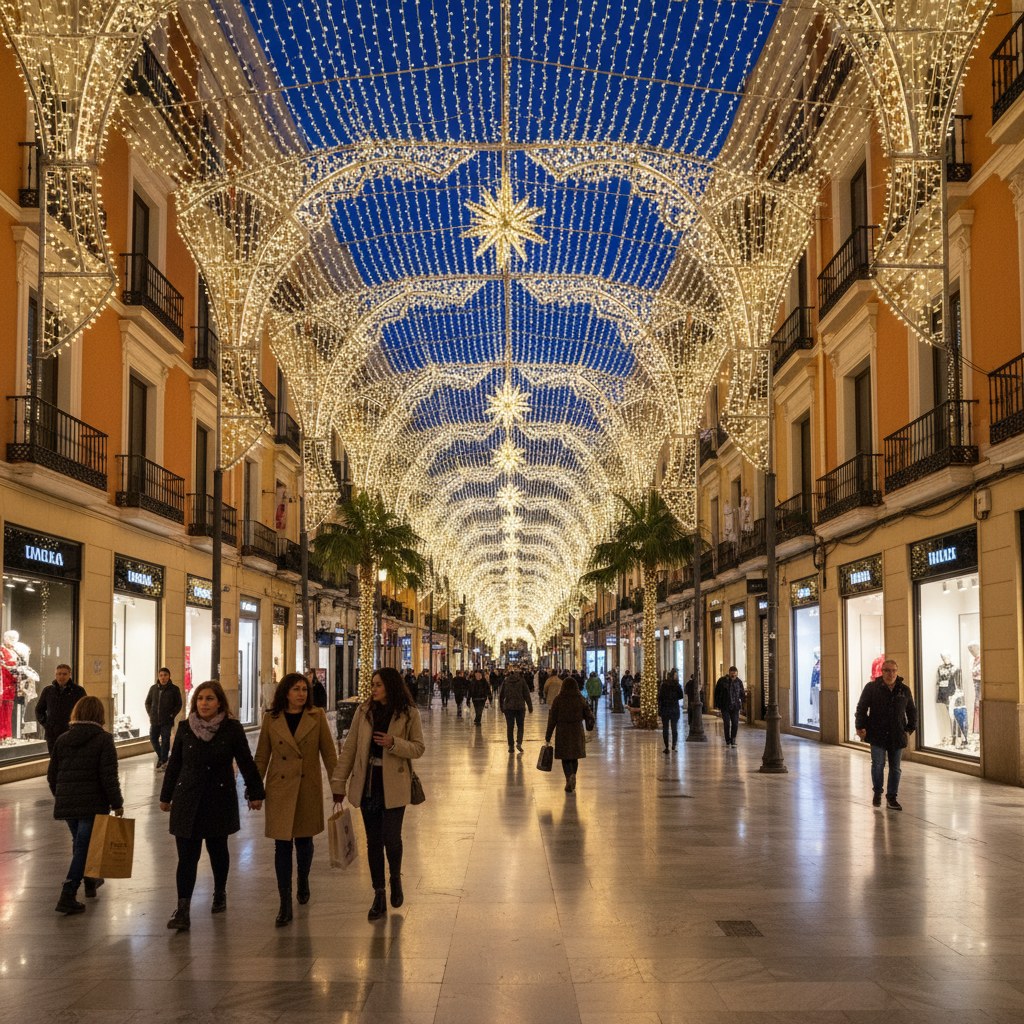
Málaga transforms each December into one of Europe’s most elaborately decorated cities. The Christmas lights along Calle Larios—the main shopping street—feature intricate designs that change annually, creating a luminous canopy overhead. The display typically runs from late November through early January, with the official lighting ceremony in late November accompanied by concerts and festivities.
The mild December weather (average 17°C) makes evening strolls through the illuminated streets particularly pleasant, and the city’s Christmas markets sell artisan crafts, traditional sweets, and seasonal foods.
Practical Information for Your Málaga Day Trip
Suggested Itinerary
A well-paced day trip from Marbella might follow this structure:
- 9:00: Depart Marbella, arrive Málaga 10:00
- 10:00-12:00: Visit La Alcazaba and Castillo de Gibralfaro (combined ticket)
- 12:30-14:00: Explore Mercado de Atarazanas and lunch at market bars
- 14:30-16:00: Cathedral visit and rooftop tour
- 16:00-17:30: Museo Picasso Málaga
- 17:30-18:30: Stroll through historic centre, shopping on Calle Larios
- 18:30-20:00: Tapas crawl in the old quarter
- 20:30: Depart for Marbella
This itinerary prioritises the essential historical sites and culinary experiences while allowing time to absorb the city’s atmosphere. Adjust according to your specific interests—art enthusiasts might spend longer in museums, while food lovers could extend market and tapas time.
Getting Around Málaga
Málaga’s compact historic centre is entirely walkable—the distance from the Alcazaba to the cathedral is less than one kilometre. Comfortable walking shoes are essential, as many streets are paved with smooth marble that can be slippery, and the walk up to Gibralfaro involves steep inclines.
The city operates an efficient public transport system, though most visitors on a day trip won’t need it. Taxis are plentiful and affordable for reaching La Concepción or returning to your car if parked outside the centre.
When to Visit
Spring (March-May) and autumn (September-November) offer optimal conditions—comfortable temperatures, manageable crowds, and full museum hours. Summer (June-August) brings intense heat that can make midday sightseeing uncomfortable; if visiting in summer, start early and take a long lunch break during the hottest hours (14:00-17:00).
Winter (December-February) sees fewer tourists and pleasant daytime temperatures, though some attractions operate reduced hours. The Christmas lights make December particularly atmospheric. Avoid major holidays (Easter week, August 15-20, December 24-January 6) when the city fills with Spanish domestic tourists and many businesses close.
Extending Your Stay: Luxury Accommodation in Málaga
While a day trip captures Málaga’s highlights, an overnight stay allows deeper exploration and participation in the city’s evening culture. For recommendations on where to stay across the Costa del Sol, including Marbella’s finest properties, consult our guide to luxury hotels in Marbella.
Why Marbella Hospitality Enhances Your Málaga Experience
Planning a Málaga day trip from Marbella becomes seamless when you work with specialists who know the Costa del Sol intimately. Marbella Hospitality’s concierge service arranges every detail—from private chauffeur transport that eliminates parking concerns to restaurant reservations at sought-after establishments and skip-the-line museum tickets during peak season. Our dedicated support team ensures your cultural excursion integrates perfectly with your luxury Marbella stay, whether you’re exploring independently or prefer a guided experience with local expertise.
Plan Your Málaga Discovery
Málaga rewards curiosity with layers of discovery—ancient fortresses perched above modern boulevards, world-class art in Renaissance palaces, market stalls selling the same fried fish recipes perfected over centuries. The city’s proximity to Marbella makes it an essential complement to your Costa del Sol experience, offering cultural depth and authentic Andalusian urbanism within an hour’s drive.
Whether you’re drawn by Moorish architecture, Picasso’s legacy, or simply the prospect of exceptional tapas in a centuries-old market, Málaga delivers experiences that enrich your understanding of southern Spain’s complex heritage. Contact Marbella Hospitality to arrange your personalised Málaga excursion, complete with expert guidance, seamless logistics, and the insider access that transforms a day trip into an unforgettable cultural journey.